

- Joined
- Jun 2025
- Subscription
- Live
Admissions profile
Applications


Discussions
I'd love if we could drill questions that are bookmarked, or have specific qualities like "answered not recently"

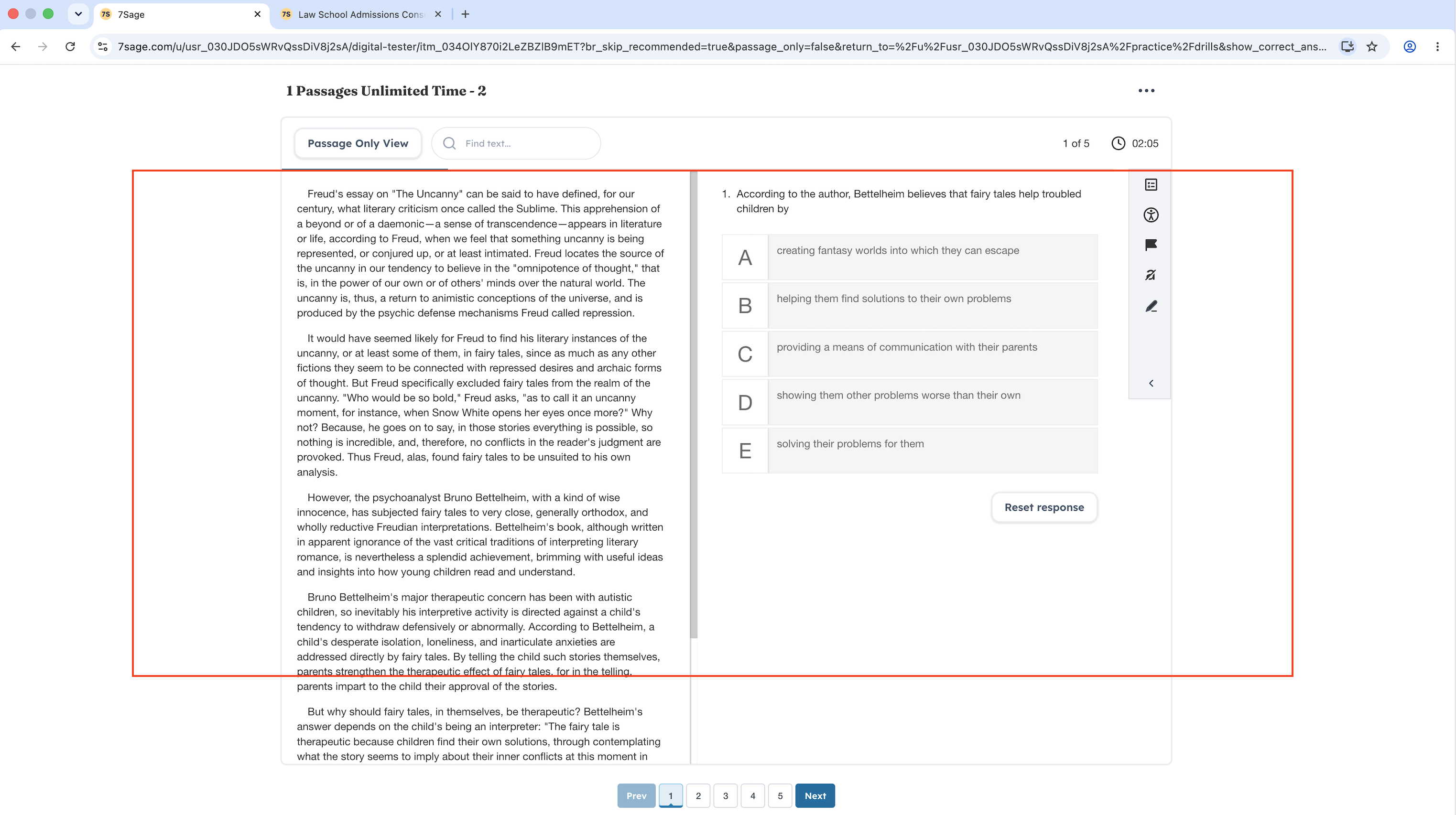 For me, it was a bit wider and less tall (like the red box I added)
@KenickieHenderson 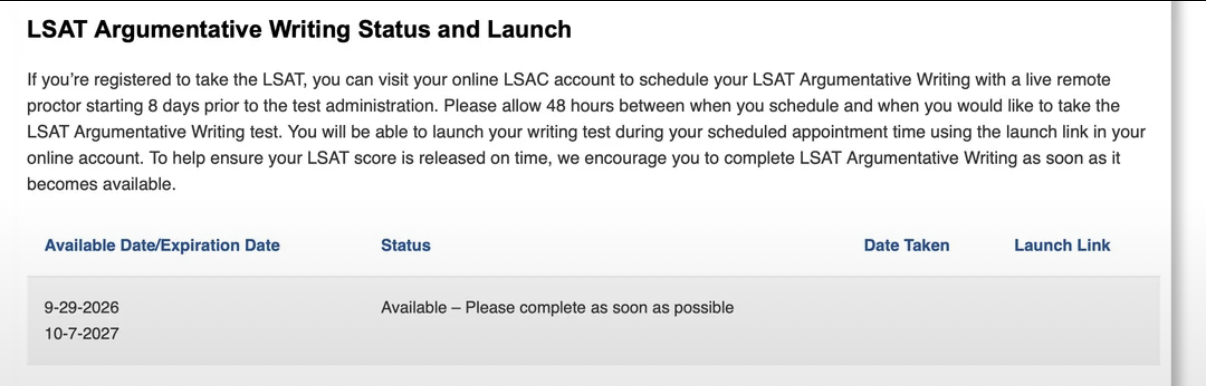 thank u! I emailed. I’ll lyk if I hear anything
I took the September 2026 LSAT and received an email from LSAC saying that Argumentative Writing opened on September 1. The email says a “Launch LSAT Argumentative Writing” button should appear in JD Services.
However, my account says “Available — Please complete as soon as possible,” lists September 29 as the available date, and the Launch Link column is completely blank. Since September scores are supposed to be released on September 30, waiting until September 29 doesn’t make sense.
I’ve contacted LSAC, but I’m worried this is an account or registration error. Is anyone else who took a recent LSAT seeing the same date? If this happened to you, how did you get the launch link fixed?
Just realized that in dark mode, the video explanations are themselves in dark mode, too. Shoutout to 7Sage for that little detail!
 Hi! It'd be super helpful if there was a breakdown of each section within a preptest in this menu, for example
section 1 lr: 80% fresh
section 2 lr: 0% fresh
section 3 lr: 100% fresh
section 4 rc: 100% fresh
 What does an independent tutor need to open this link? It doesn’t work
I get that too. It doesn't interfere necessarily, but its annoying nonetheless
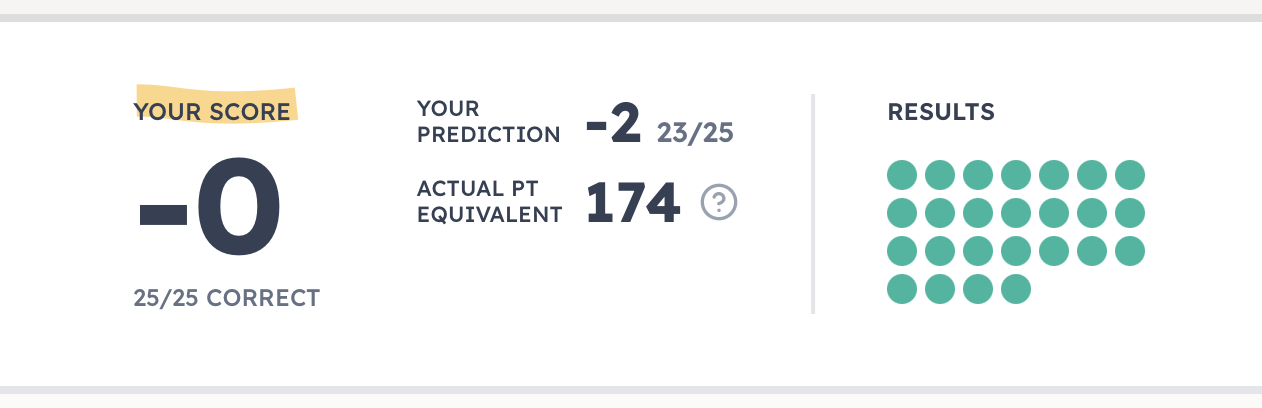
I'm 75% through a practice test and my testing platform is slow, unresponsive and not loading well. The timer just keeps ticking down. Anyone else experiencing this? I tried switching wifi networks with no success.
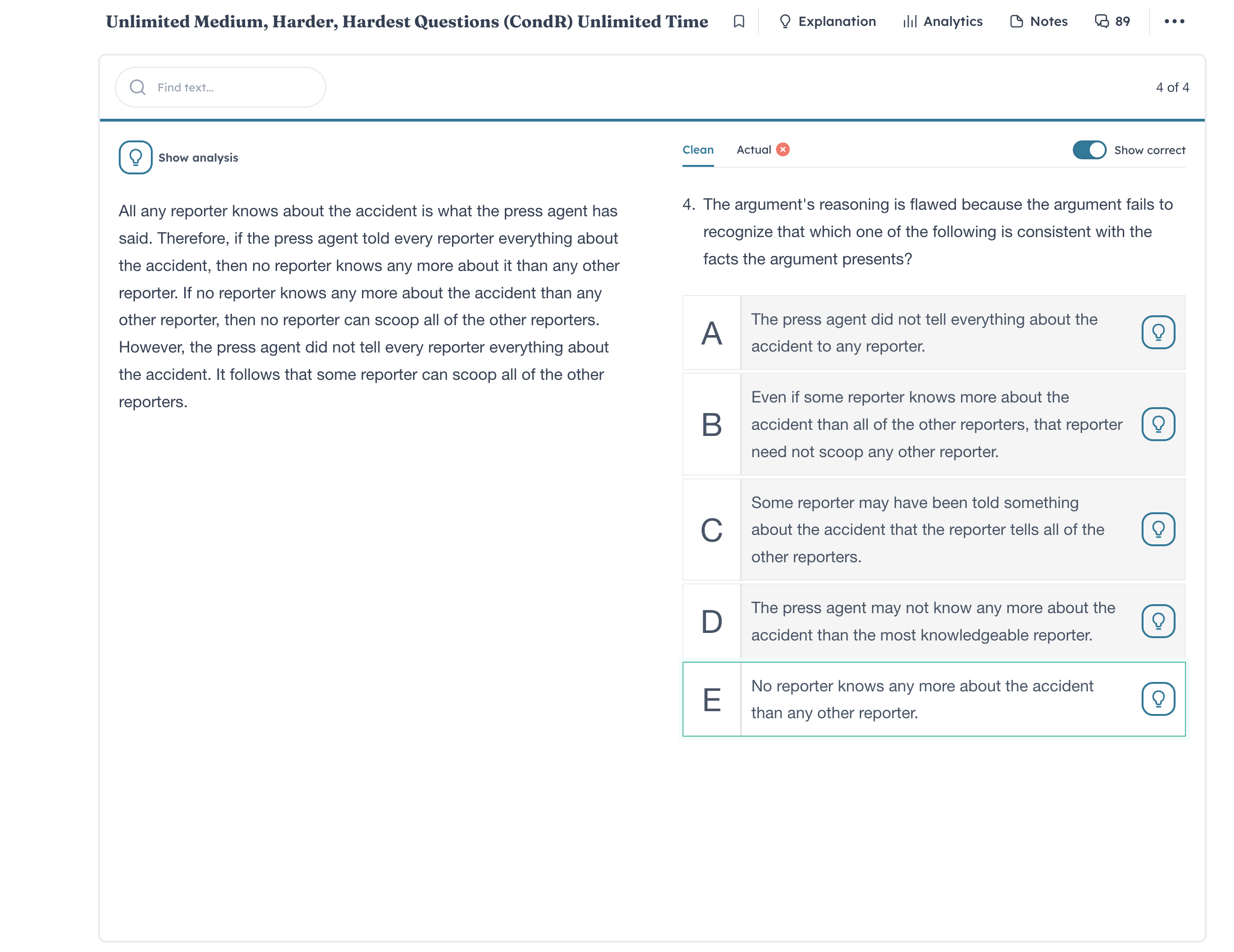 Can you please add the question numbers / prep test / identifying info for drills?
@MJ question types under the cheat sheet https://7sage.com/lsat-resources/lr-question-types/AP https://7sage.com/lessons/logical-reasoning/introduction-to-logical-reasoning/logical-reasoning-cheat-sheet
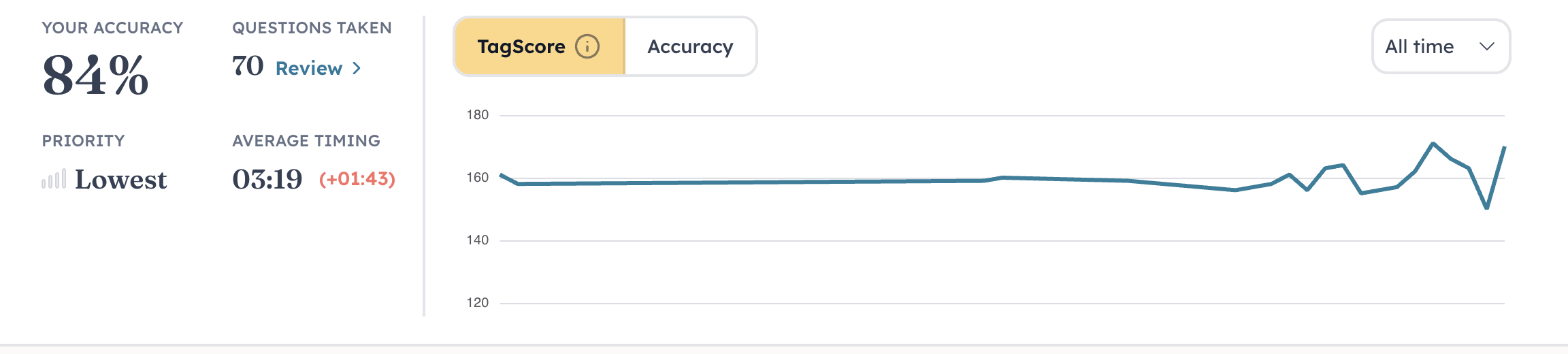 I wish there was a way to see this on one page for all of my question tags
Doesn't the columnist's argument, in trying to deny the reasoning presented, constitute an attempt to explain said phenomenon?
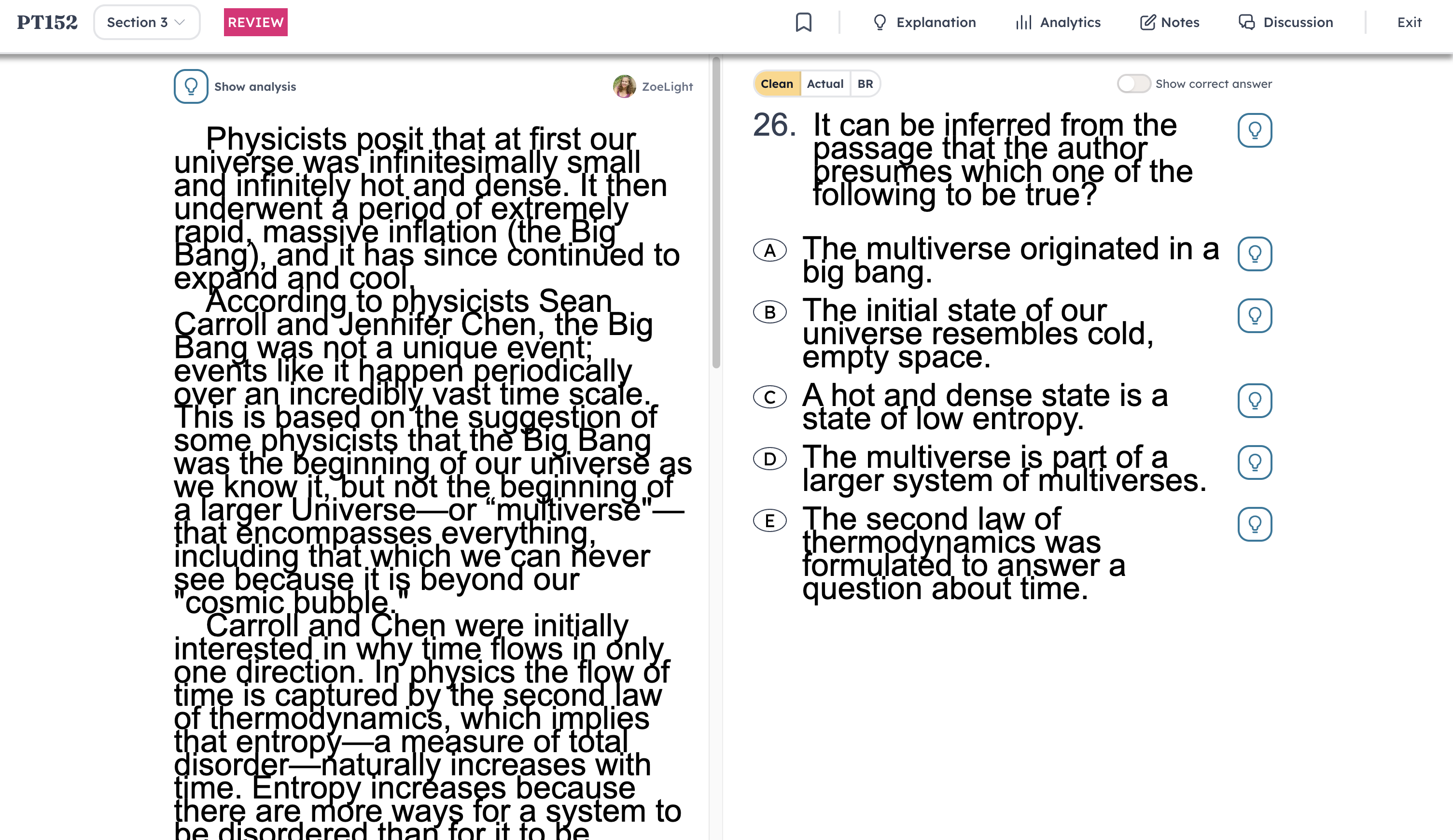
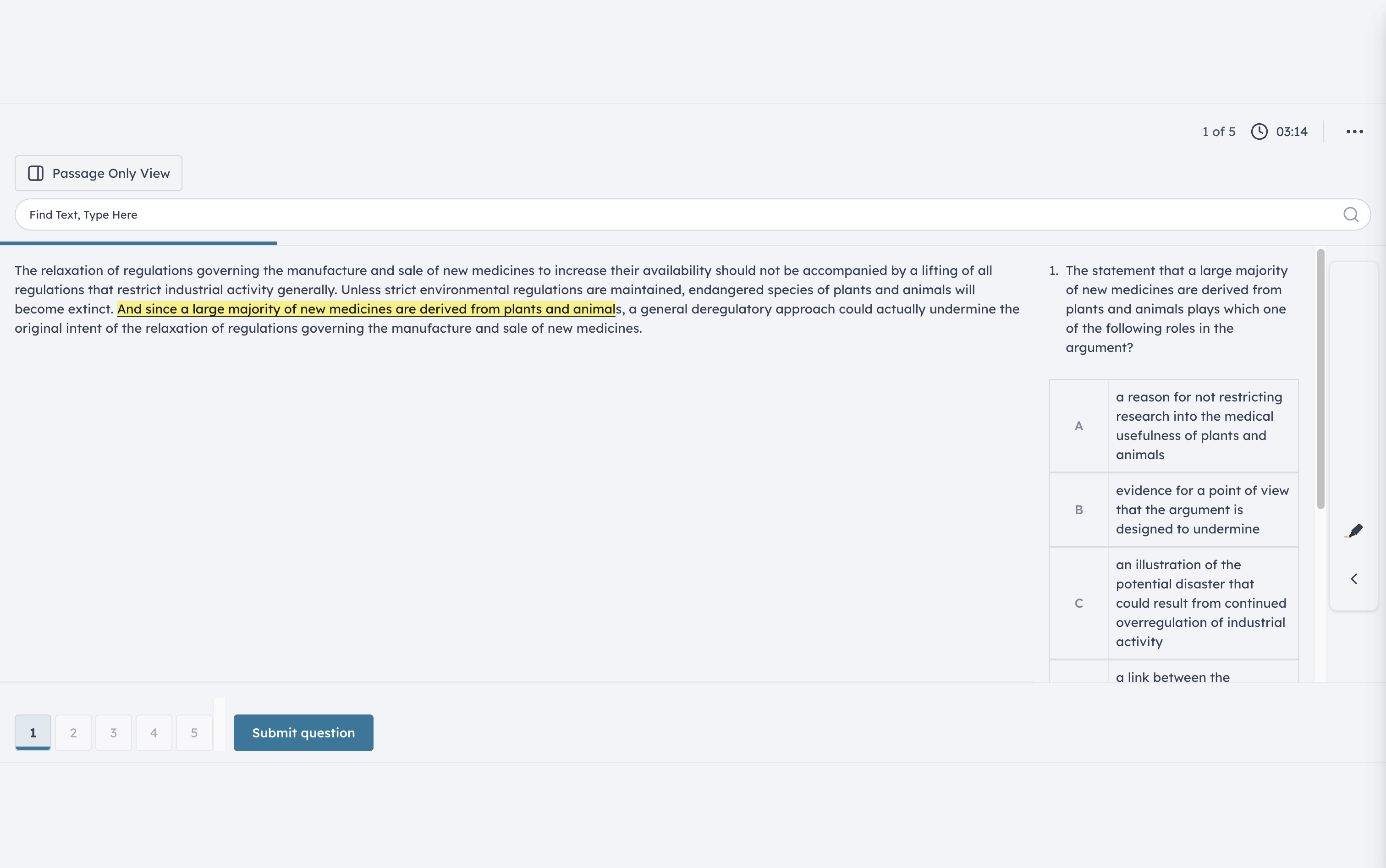
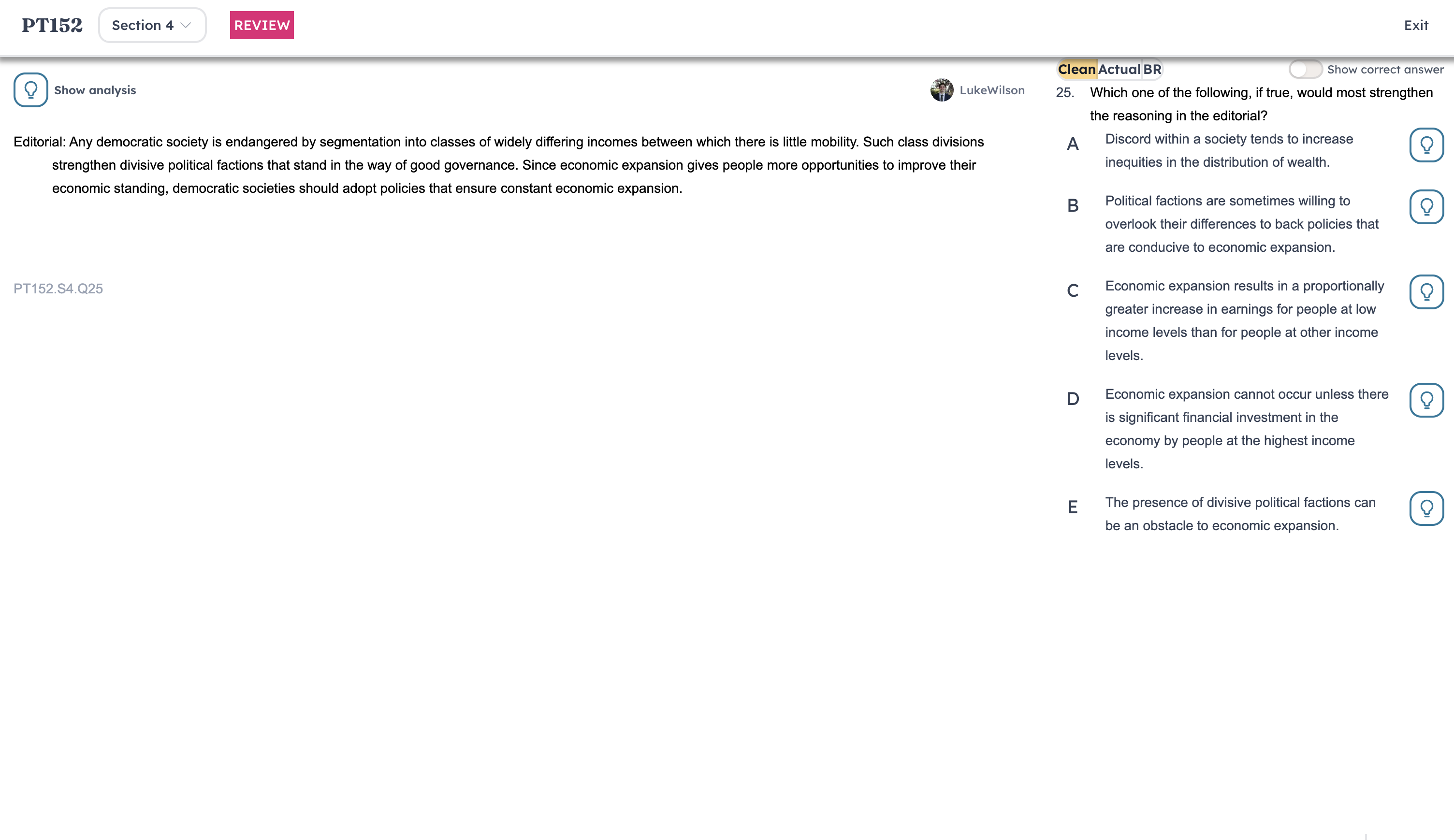
I'm trying to take a practice test right now. this is super frustrating
but it says predators ate the pellets no matter which one was present. that implies that they ate all of them
Is there a difference between selecting “I have something in mind” and “nothing in particular” ?