


LSAT
New post300 posts in the last 30 days

I feel like I struggle with RC a lot. I am constantly running out of time on these sections. I want to skip around to the passages that seem easier, but every time I attempt to do this, I don't pick the correct ones and end up spending way too long on a harder one and having not enough time to do more simple ones.
I really don't know how to better improve my RC and I have the test in a week!


I just scored a 167 on PT158 -- How to close the gap between actual score and blind review??
 Hi y'all!! Just took my last PT before the August LSAT and scored my highest yet-- but still shy of my 170 goal. As you can see, there's a pretty significant gap between actual score and BR, which is consistent with almost every PT I take.
Does anyone have advice for closing the gap between actual score and BR?? I don't know whether to attribute it to test fatigue or the fact that I take way longer on my weakest question types (conditional reasoning nerfs me). Any advice from people who have scored similarly/gotten over this hurdle would be much appreciated!
Good luck to everyone taking the August LSAT, I believe in us!! :)

Just asking for some tips! Taking it on the 6th scoring anywhere from 159-161, any tips to maybe jump it up by a point or two before the test?

After your writing portion of the LSAT is processed, are you able to read what you wrote?

They changed the font in LawHub!
Last week:
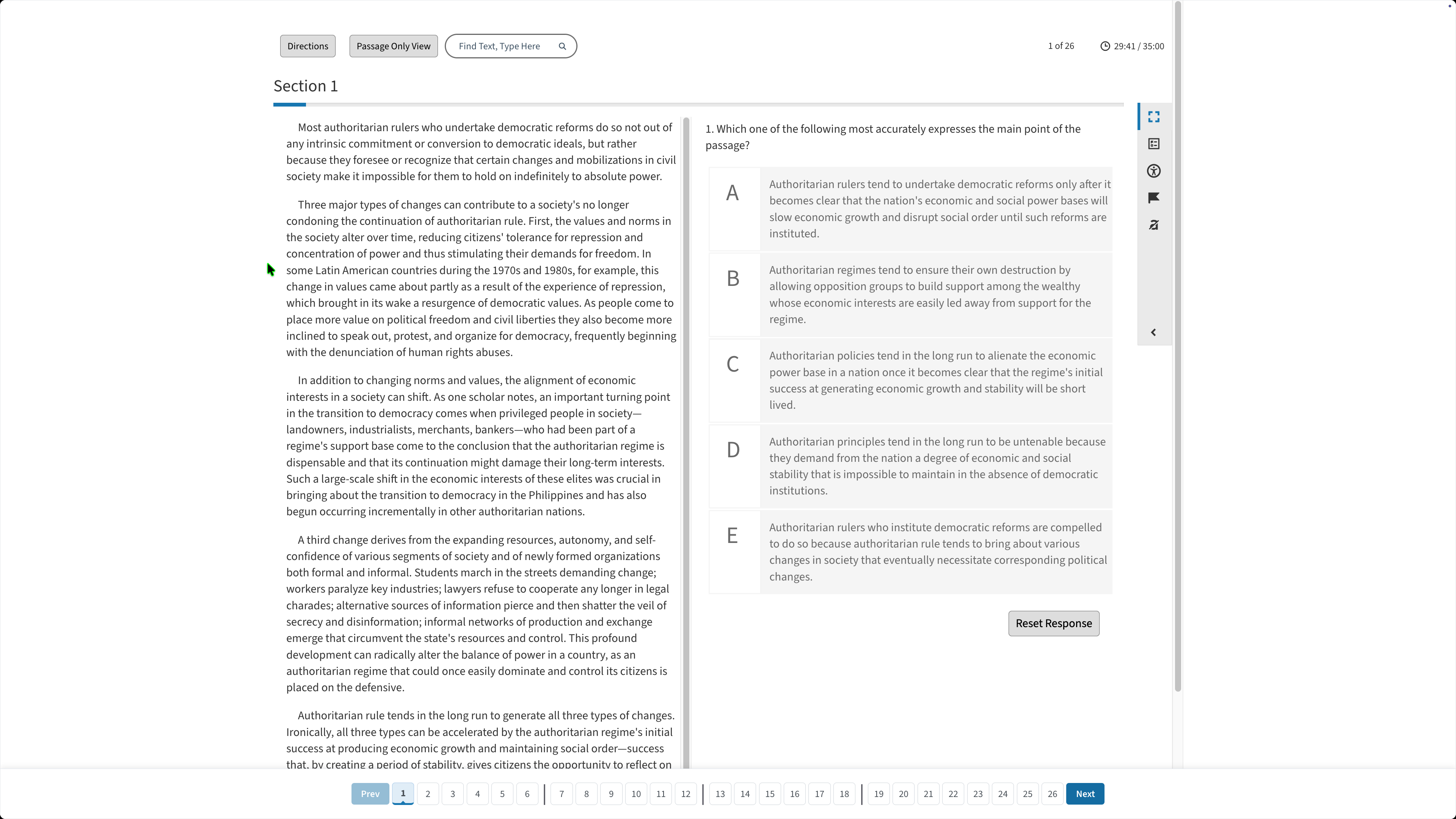
TODAY:
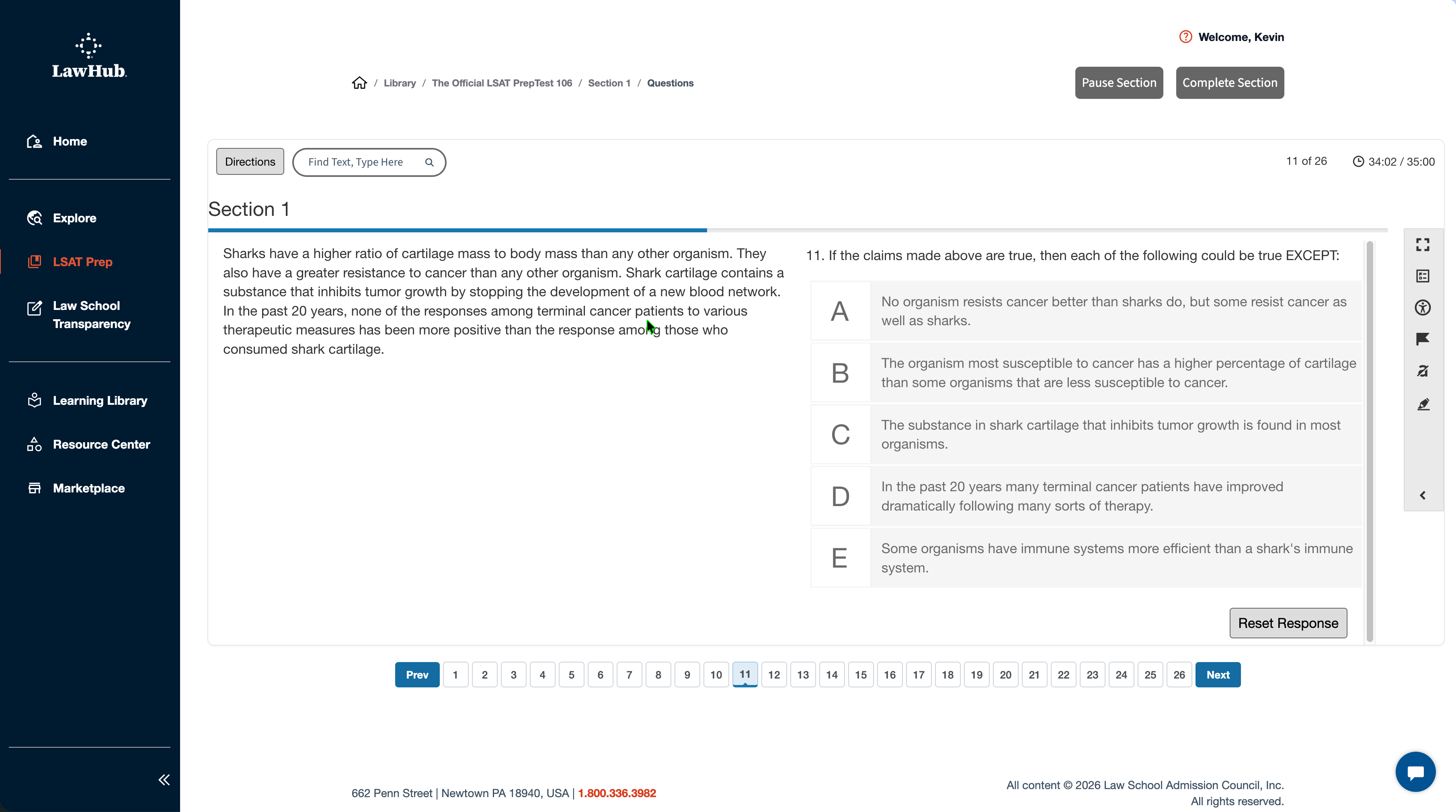
****
We've updated our tester to match the font you'll see on test day. If you find the text too small, change the font size with "Accessibility options" in the right toolbar. LSAC's default is Large (125%).

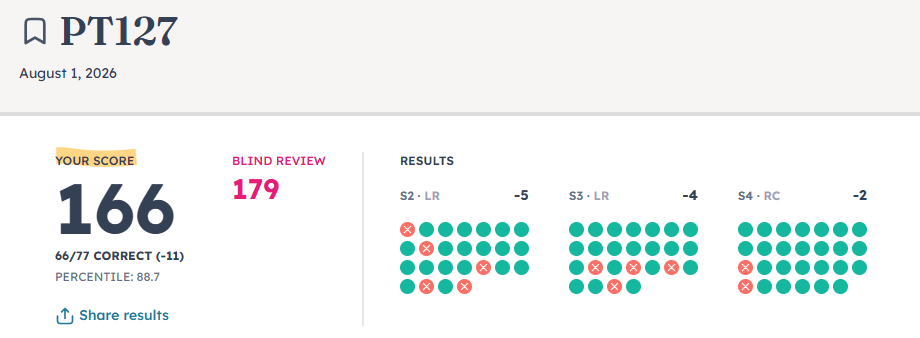 Been at this studying thing for almost a year and finally seeing progress now that I've slowed myself down and started doing untimed. I think timing will always be an issue for me, but hopefully less big of a deal come November.

people who started in early 140s, how many points did you increase after 3- 4 months of studying if you studied 3-5 hours a day

I am planning on taking my first LSAT in November. I am 4 days away from finishing the foundations and was wondering if it was worth it to focus on the lessons or to prioritize drilling? I am getting worried that I am falling behind by spending too much time in one area.

I'm taking the LSAT next week and am praying that this energy follows me (and if it doesn't, that's okay! I've registered for Sept too). I would genuinely be so happy with a 165. Manifestation!!! 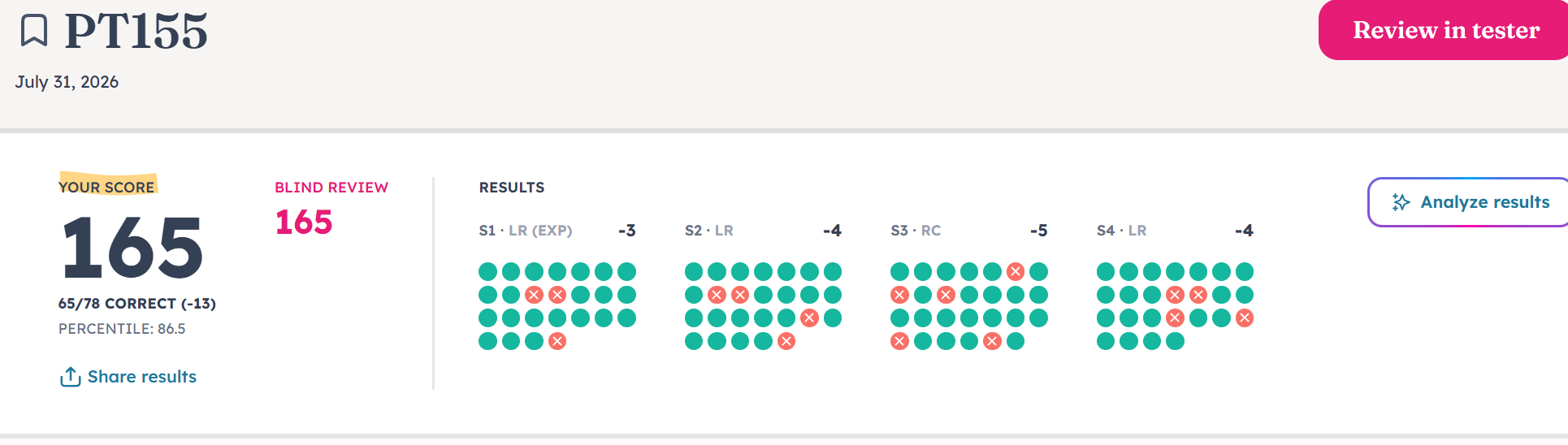

I have a question about drilling and long-term LSAT preparation.
I started using 7sage two weeks ago. Before that, I honestly knew almost nothing about how the LSAT worked. I had no understanding of conditional reasoning, the different question types, or the way the exam tests reasoning.
My diagnostic score was 135, but English is not my first language, so I think that score reflected both my lack of LSAT knowledge and the language barrier.
Right now I’m simply following the 7Sage study plan from the beginning. After each lesson, I complete the associated drills. Lately, I’m usually getting only 2/3 out of 5 questions correct, and then I spend a long time reviewing every question and every answer choice. I feel like I learn much more from the review than from the actual drilling.
My concern is that I probably won’t be taking the LSAT for at least another year. Since English isn’t my first language, I know my preparation will likely take much longer than average because I’m learning both the LSAT and advanced English reading skills at the same time.
I’m worried that by the time I’m ready to start doing lots of timed sections and full PrepTests, I’ll have already worked through most of the available questions. Because I review each question so thoroughly, I often remember the correct answer for weeks afterward. I’m afraid that when I come back to those questions later, I’ll remember the answer instead of reasoning through it, so the drills won’t be as useful.
How do people who study for a year or even longer usually handle this?
Should I continue following the study plan and doing all the drills without worrying about “using up” questions? Or should I be saving a large number of PrepTests and drill questions for the later stages of my preparation?
I’d really appreciate hearing how people who had a long study timeline approached this.
Thank you!

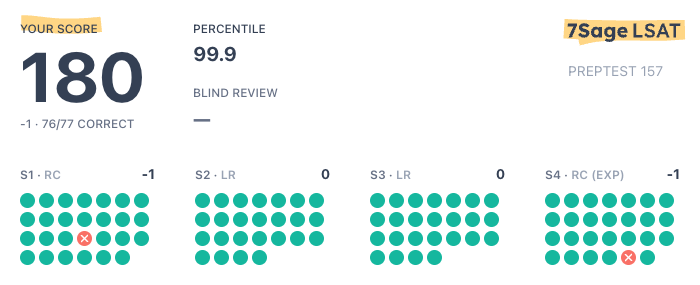 Last PT before test day! I was feeling super discouraged because my previous PT was below my average, but lowering volume and anxiety levels does wonders!

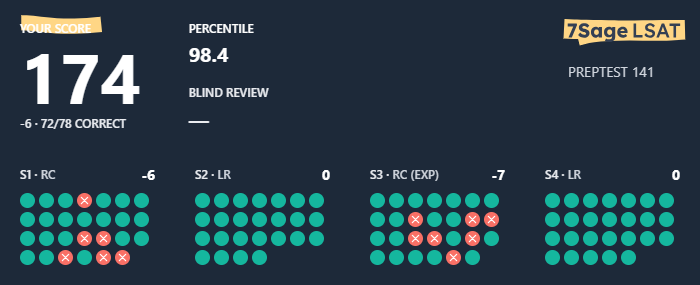
Tips for getting better at RC? This is the first full test I've taken, and I've only worked on studying LR.

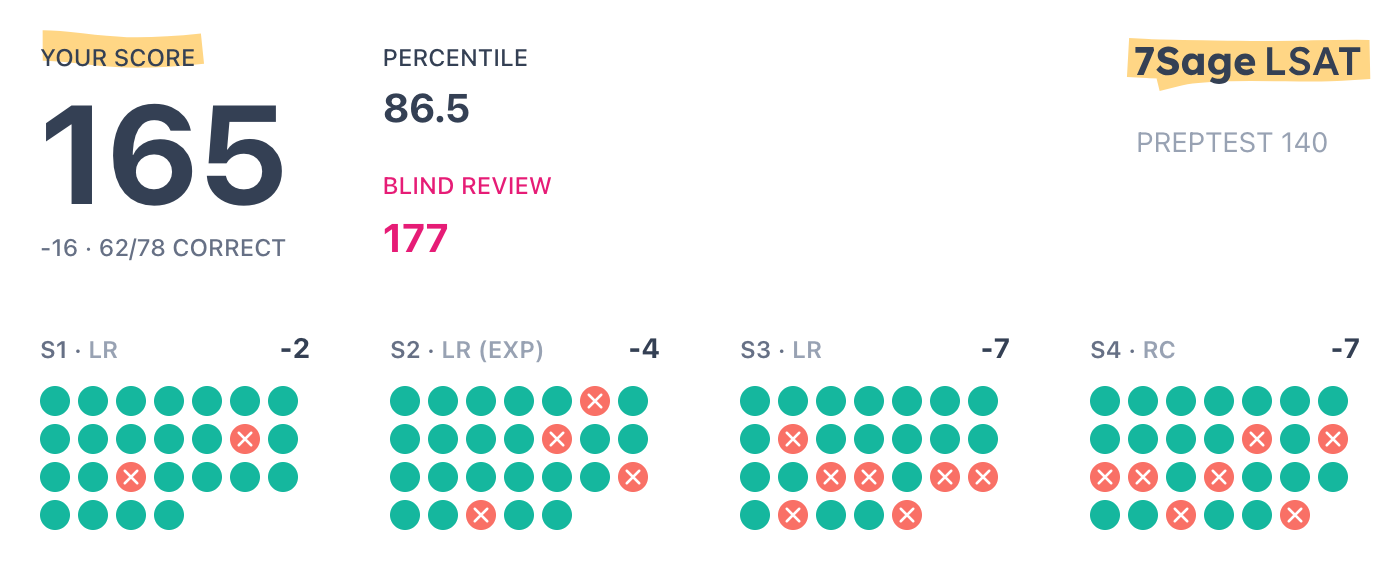 I just did PT140 and there's a HUGE gap between my BR score vs my actual score, more than half the time I'm between two answer choices and end up choosing the wrong one. Does anyone have any advice on closing this gap and selecting better the first time around?

For me parallel flaw/reasoning is one of my weakest question categories on the lsat not because I cannot solve them, I'm just very slow. I am so slow that when I encounter one on a section or preptest I am better off guessing and skipping rather than wasting the little time I have on it. When I do drills where I have unlimited time I think generally I get them right 80-90% of the time.
My current approach is to diagram the stimulus out on paper and then check each answer choice to see if it matches the structure and form of the stimulus. It's especially tricky for me when the form of the stimulus and correct AC are different because I have a hard time abstracting in my head.
I've been trying to improve by drilling more. I do something like 5 questions at a time medium to hardest difficulty with unlimited time. I think I've gotten better at getting these questions right, but not any better at improving my speed.
Does anyone have advice/tips?

I am confident in my LR ability with getting -1 and -2 multiple times on PTs and section practices. HOWEVER, RC is bringing my score down so so much. I am supposed to take the August exam in a week. What can I do to improve my RC?
I feel so good while doing RC, but then I get -10 wrong. I don't know what to do.

For context, I signed up to take the June LSAT in congruence with graduating undergrad this past May. I didn't have anytime to really study and with the expensive nature of the exam, I went and took it anyway with low expectations of course. I scored a 150 which is exactly where I though it would be tbh. Since then, I have started a full time job and studied as much as I can with the timing of work and while its definitely going to take more of an effort on my part, I'm overall just feeling burnt out and slightly scared for this next exam I scheduled. I am not doing amazing on my practice drills and I am personally aiming in the 160-165 range. I know its possible, I'm just having a hard time with it all. I really want to apply this app cycle but I'm having this sinking feeling I may have to put it off another year all because of this score.
long story short....I'm in shambles.

I've been trying to complete a BR for a section I took yesterday, but the page won't finish loading. I can't select highlighting options, switch questions, or see the questions recommended for BR. I thought it was a me issue, but I've tried reloading the page, closing out of Chrome, restarting my computer, using incognito mode, and even using another browser. This has been an ongoing issue for at least the last 4 hours.
Not sure how to fix this and not sure whether it's just on my side or an issue with 7Sage's website, but help would be much appreciated since I'm taking the LSAT in a week and was kinda hoping to study...
Ok, as I was about to press send, the highlighter mode started working, but now I'm having another issue: if I highlight things in one colour, but then switch to another, everything previously highlighted disappears... Also, I still can't select other questions. PLS HELP thanks!

The September LSAT offers a timing accommodation of 1.25x time (I'm not sure if this has been offered in the past but it is offered in September). The accommodation options in settings only offer 150% time and 200% time. I can manually enter 125% for each practice test and drill, but will there be an option to change my settings to 125% time? Thanks!

Hello all! I am to take the LSAT in August, but I plan to take it once more regardless of my score. I have been studying this summer and can say I have made lots of improvements. When I took my first ever diagnostic, I scored a 137! My highest PT was a 160 which I took back in late July or so. My goal score is a 170. I took close to a week off of studying and am doing not as good at my PT. I got a 151 or 155 on my latest PT. This is extremely frustrating and scary because it feels like I have regressed in a span of a week. It has been two days in a row where I get -12 or -11 on a LR or RC section.
Has anyone experienced a fluke or lapse in their progress while on their LSAT journey?

Quick question: on the actual test- is there a time/clock on the top right for all sections??
Also, side question. If you have to use the bathroom what happens....?

Hey Everyone!
I'm hoping to hear from some others who have gone through a similar plateau as me and provide some advice on what got them over the hurdle. I have been plateaued at the 160-161 range for about a month at this point, and I am looking for some tips to get over the hurdle to my goal of 165.
Recently, I have spent a lot of work on my LR scores, and have gone through the Loophole book as well as the 7sage content, and have transitioned to doing targeted drills on my highest priority and reviewing all my misses.
This is all fine and dandy, however, my RC scores seems to be lacking and I feel some improvement in this area would provide the best effort to return ratio. While my LR seems to hover from the -4 to -6 range, my RC is still around the -8 to -10 mark. It is where the misses come from that makes me think it is a good point to improve on.
What I mean by this, is that my RC scores tend to fluctuate greatly from passage to passage. Some passages that I read and understand well I do close to perfect if not perfect, but when the content is unfamiliar and difficult to understand in the heat of timed situations, I consistently get like half the questions right. The difference seems to be purely based on my comfort of the passage. Does anyone have advice, tips, or resources that helped improve this reading and understanding side of the LSAT? I went through the Mike Kim trainer RC sections, and it heavily focuses on structure and points of view, but I still end up bogged down wasting time on details that I need to understand for questions but don't. Does this naturally improve through repetition, or should I be targeting this weakness somehow?
Any tips would be greatly appreciated! Thanks!

I keep on scoring -10 or so and it's killing my score

Hi there! I notice my biggest hurdle is my brain is impatient and I jump ahead when reading instead of taking my time. I have the biggest success doing thing like the games, but I need to improve as much as possible and I notice it affecting my scores, any tips are welcome!
I love when I do not do well on a RC section simply because I missed LITERALLY ONE WORD in ONE paragraph. Does anyone have any tips besides just slowing down when I am reading so I can overcome this problem?