


- Joined
- Jun 2025
- Subscription
- Live
Admissions profile
Applications


Discussions

when looking for answer choices, look for the answer choice that directly targets what is talked about in the conclusion.
Conclusion: med cost effective-> spend not enough TIME TEACHING PM
E. targets the TIME TEACHING PM, the main point of the argument, not the cost effectiveness.
the time required to teach PM thoroughly is NOT greater than one hours for every then that are now spent teaching CM.
completely destroys the argument.
I chose D at first the negation was: improvements in doctors' use of CM would NOT increase overall med. costs.
this would be correct if the MP was about CM and medi costs but its not. its about PM and the sufficiency of teaching it.
I chose B twice for this, solely because it brings an alternative explanation, but the industrialist doesn't care about other sources, they care only about the SCIENTISTS.
C is correct because the industrialist rejects the testimony from the residents because its weak or lack of authority, yet they don't present any evidence that could counter their testimony or back his argument that the factories emissions present no health risk.
didn't choose C at first because, to be completely honest, I haven't had a descriptive flaw question that hasn't had an answer choice, or presenting the flaw of lack of evidence. So off of pattern recognition I eliminate the choice.
I'm confused, wouldn't E weaken because it's kind of in favor of the research, like another reason to conduct the study???
So I've been studying consistently, drill consistently every day about a section a day review and then two passages, vice versa (RC section the 10q LR) ... I've been seeing a huge gap between my first pass score timed sections, vs. my blind review. I've been keeping up on my wrong answer journal, I definitely see an improvement on the way I approached certain question types, but in all honesty I'm a bit nervous because I registered for the October test. Any tips?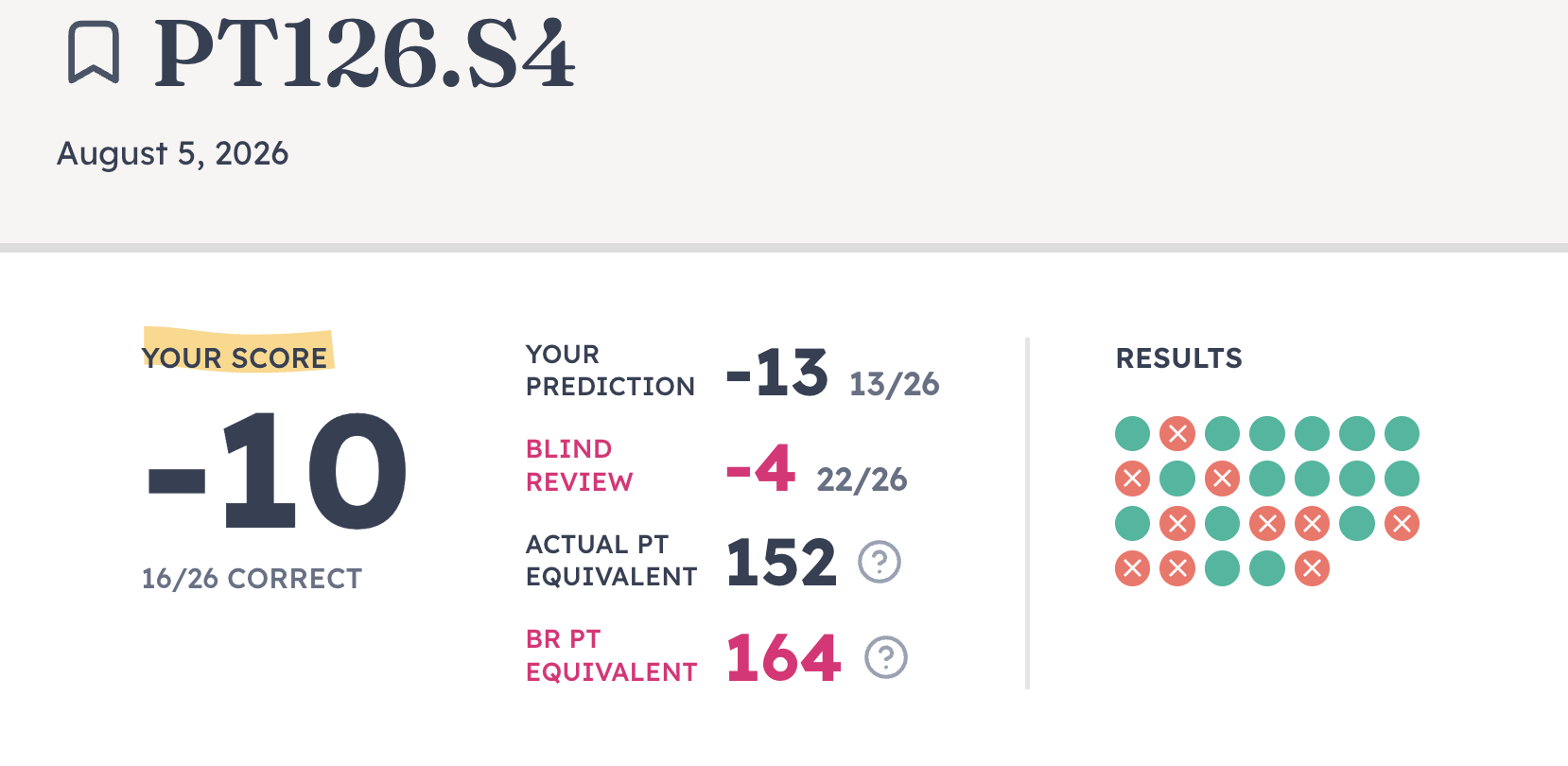
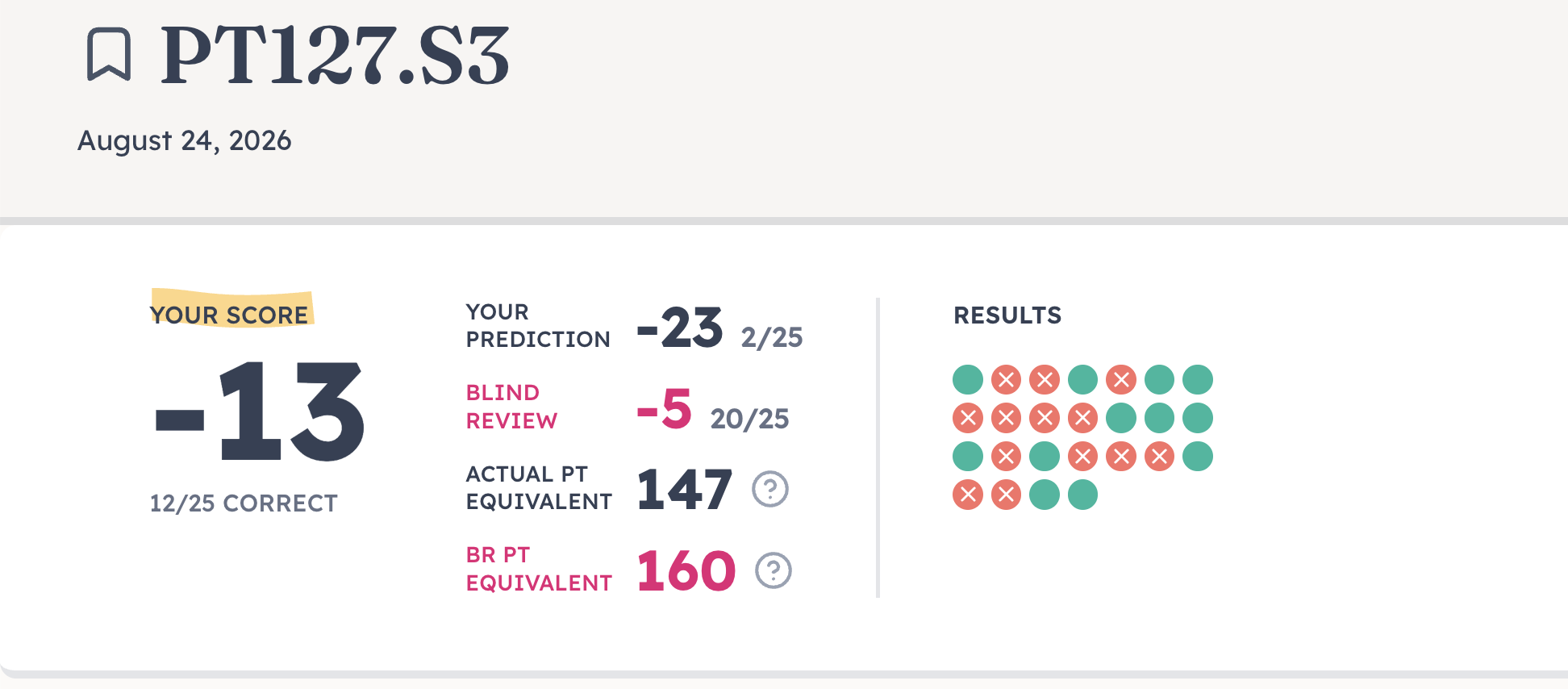
In my BR after getting it wrong the first time, by choosing (C), I chose (A), for some reasoning without paying attention, I chose to treat this as a flaw descript. (describe the flaw). And concluded that because it's talking about the bats in Bracken Cave then generalizing it to bats in general, its a parts v. whole. But that was my mistake.
I recognized it was phen. hyp. and was confused as to why C isn't correct. I questioned B because of the "establish validity" part.
For such question types, I found a method that helps me.
Read both arguments carefully, then, when looking at the answer choices, from what I've noticed, it's something stated in the first argument made (first speaker), that's going to be correct. Because the second speaker will disagree, then we don't know what the first speaker will respond back.
Daniel: No action can be morally good unless it is performed with right motivations.
Carrie: (disagrees with requirement of action) the only thing that can be required for an action to be morally good is that it fulfills a moral obligation.
Answer choice D reflects the pattern I noticed.
It's the Daniel argument.
Daniel: ~right motives -> ~ morally good
Answer D: wrong motives -> ~morally good
For question one, I didn't chose B because I was looking at the last sentence of the paragraph, a quote, "Whenever you write prose or poetry or drama you are writing a social criticism of one kind or another. If you don't, you are completely irrelevant—you don't count." I know throughout the passage it discusses the little interest in guidelines that differentiate between fiction and autobiographies, but the last sentence really threw me off. Kind of sucks I didn't get this level one question lol.
I initially right off the bat chose A, but then reread the question stem and realized that the passage is saying most strongly SUGGESTED, and not most strongly SUPPORTED. I figured because that this is implied, its not suggested, its too obvious i went with B then E because it says for E, that prior to 1700s alaskans hunted sea otters regularly..
my question is do i treat Most strongly suggested questions in RC, like most strongly supported if that's how i went about it from the start before changing my answer choice to B then E
At first i was confused as to why C is not the right answer, and how D is... but i looked back at the stimulus which supports it clearly.
C is supported because the volcanic eruptions that cause large amounts of dust into the Earth's atmosphere drop the average temp of the Earth. This is something that the stimulus supports. Ice Ages happen (earth's temp drops), when sun is dimmed (volcanic eruptions dim the sun when large amounts of dust are spewed into the atmosphere).
D is not supported because, first we're talking about cosmic rocks, second once the cosmic rock enters the atmosphere, the answer says that it raises large amounts of dust from Earth's surface. Focus on the dust for a second.
Stimulus says in order for the the dust cloud to have any effect, they must be dense, we don't know this about the dust mentioned in D, second we also don't know if they dim the sun, which causes temperature drops, because maybe the dust isn't dense enough to dim sunlight, or absorb heat.
Okay, I immediately crossed off D because the stimulus talked about a free month's supply, and i stupidly made the unwarranted assumption that "free" means, free shipping and handling, and thought this completely goes against what the meaning of free is in the premise.
And even after jumping and choosing between A and E, I was so confused as to why neither of these options make sense.
I'm confusing the process of finding the correct answer choice with the method of SA with PSA. I keep choosing a principle/rule that's more generalized and broad, rather than something that's narrow and specific to the argument.
I first chose A, until I read D, then figured because it isn't a PSA question type, A isn't right because it presents a principle type of answer, where as D presents a premise.
So when we choose answer choices for SA, during my blind review I treated the question as a PSA and chose A, (what I initially thought the answer was), should I just keep doing that? Or how do I know that if I'm looking for an answer choice that's kind of a principle (generalized) vs if I should look for an answer that's more specific to the stimulus like D.
I see thank you for your response