


LSAT
New post300 posts in the last 30 days

I don't know if it's just me, but ever since the new Reading Comprehension highlight update, every time I highlight something, the page automatically scrolls up. For example, when I scroll down to highlight a sentence and then try to keep reading, it jumps back up on its own. It's really annoying because it won't stay where I scrolled. Is anyone else having this issue, or is there a way to fix it?

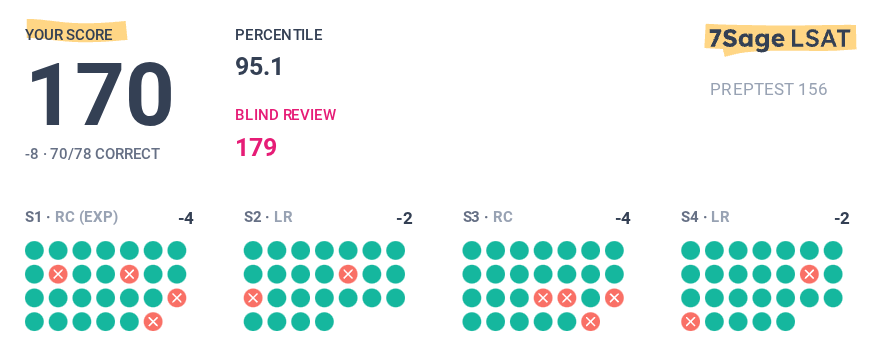 There is light at the end of the tunnel folks! Dreams come true. Prayers become answered.

I've been subscribed to 7Sage for at least six months. I'm starting to run out of actually new reading comprehension passages, and I was wondering if anybody else has been running into this issue? When I select fresh on a drill, it says I don't have enough passages to fulfil this requirement. I'm confused about how this can be because I find it hard to believe that I have done all of the available Reading Comprehension passages, especially since I know that I still have more practice tests on LawHub that I have not yet taken, and I'm also not running out of LR despite training sections of that just as frequently.

I was recently diagnosed with ADHD a few months ago, and I'm still figuring out what works best for me. For those of you who also have ADHD, what study strategies or schedules have helped you make progress without feeling cognitive overload or losing focus? I'd really appreciate any tips or routines that have worked for you.

I know there has been the new change! Yet, whenever I go to highlight...nothing. The highlighter tool does not pop up at all. Is anyone else having this issue? I really need my highlighter lol.

Consistently getting 163-165 timed and 175-180 BR for the past couple weeks. Any advice on improving the timed performance to match the untimed?

https://7sage.com/games/stimulus-x-ray
Download the standalone LSAT Games app to keep playing when you're offline:

I have a problem concerning the difference in accuracy in my RC drills versus my RC in PTs. It is common for me to score -1 or -0 per passage in RC drills, but when I try and replicate this in PTs, I average around -3 per passage. What is making me do this? Any tips?

Anyone else taking the LSAT from abroad? I'm a Peace Corps volunteer in Cambodia and since I'm not allowed to leave the country in the last couple of months of service, I'll be taking the international test date in October. I'm a bit nervous about all of the new changes to the LSAT and the online proctor, so I figured I'd reach out to see if anyone else was in the same boat. But no matter when or where you're taking it, good luck!

Really loving the Logic Links game as someone who needs to improve both accuracy and speed on conditional logic.
Some new terms in there that I have not found grouped in the lessons... what groups would "is enough", "is sufficient", "guarantees", and "is necessary" belong to?

Hi! This is my second time taking the LSAT; I've been studying for about 6 months total now, and I have progressed well with LR, but I feel like my RC has been stagnant.
I find that my biggest issue is even if I spend 5-6 minutes reading the passage, I don't understand the full meaning (especially with the added timed pressure) and have to rush through the questions. Many say that taking notes on the author's opinions, tone, structure, etc. takes up too much time.
Any advice on what I should do to have better understanding of the passage? Not sure how to truly make myself be more of an "active" reader, as I see with other suggestions.
Any and all help would be greatly appreciated!!

I am trying to get past the 149 jail. I have been there for weeks and I at least wanna break into the 150s. I take the test in August and September. Any tips? I haven't taken a full PT in awhile. Should I?

During my timed PT I am doing significantly worse than my BR. I know there is some controversy about the truth behind BR but I definitely find myself making simple mistakes when the pressure of time comes in. I don't know how to stop that. I feel like I have reached a plateau at my timed score as I keep scoring around there. I feel like something needs to click in me, but it is not and I am not sure what to do. Any suggestions?

My conditional reasoning and diagramming skills are usually solid. I often do it the same way it's done in the LR lesson videos.
However, looking at my wrong answer list, a significant chunk of the questions are tagged with conditional reasoning! This suggests to me that my basic cond R skills are alright, but I get stumped by the ways the LSAT tries to trick us, especially on level 4 and level 5 questions.
How can I improve? Where can I get practice with advanced conditional reasoning, and why is the LSAT so good at making cond R difficult?

I would be eternally grateful for a live class on a super hard science passage like Basins of Attraction or C-4 Photosynthesis! It would be like an early Christmas treat for me!

Hi everyone!
I have recently hit a wall with the RC sections and can't seem to increase my accuracy even with extensive practice. I was wondering what others have done or do to increase their accuracy, like tips, methods, or creating new ways of thinking. Hopefully this makes sense; any help would be appreciated!

Hey, like the tittle states I will be travelling for 2 weeks due to the loss of a grandparent to a foreign country and I am having trouble conveying my worries to my parents that my score will decrease significantly when I return. I will return 2 weeks before the September LSAT but I will also be starting my courses for the Fall and working on campus. My first question would be, is there anything better to do then just downloading practice tests and trying to do sections when I have free time. Secondly, what is the best way to wear off the rust of not having been able to study consistently for those 2 weeks before the LSAT? Thank you for any advice!

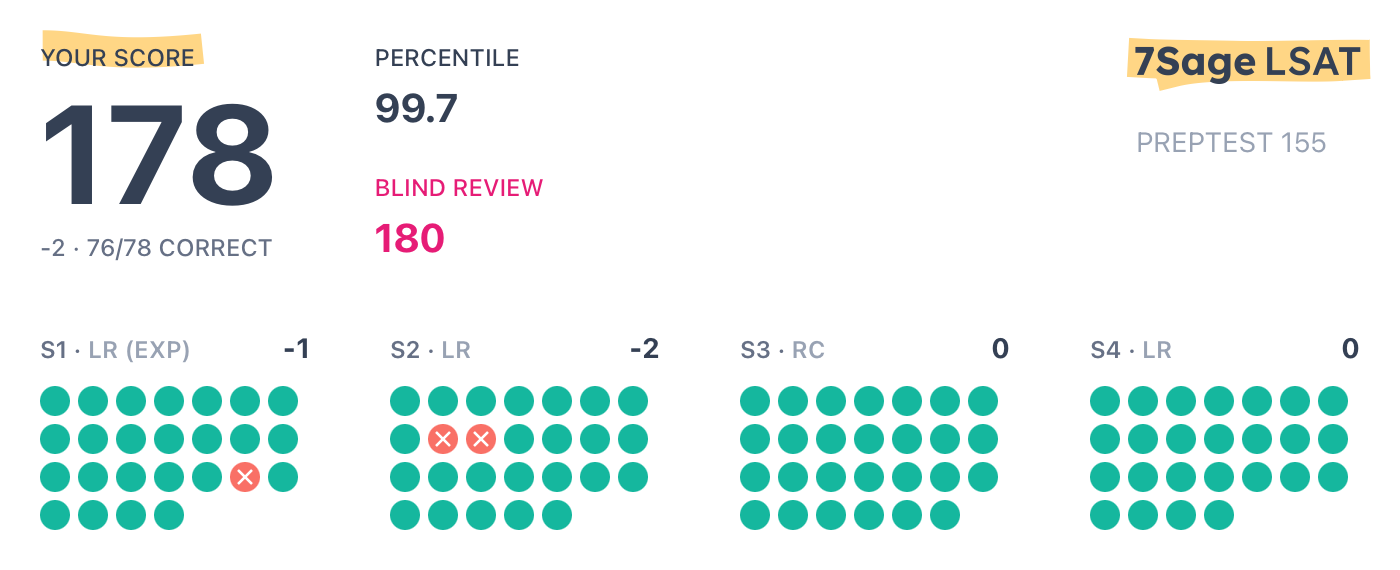

Hello! I've been studying semi- consistently since Mid-Late May after I got my 160 diagnostic. Since then all my PTs have been around this range and my best one was 163. My goal is 168+ by the September LSAT and 172+ by October LSAT (Ideally 170+ by September). When I do study its usually for around 2 hours.
I have 2 questions:
Are my goal scores realistic?
What can I do to get there by the deadline?
Thank you guys in advance !

Hello! I've been studying for the LSAT for about 3 months, and the last month has been the most consistent (10-15 hours of studying a week). I started with a 156 diagnostic score on PT 158 in April. Since then, my score has only gotten worse. My most recent PT Score was a 151 with a 164 BR score. On drills, I'm getting consistently higher scores, and my confidence is increasing, but with my goal of a 172, I'm not sure if I'll make it by my current September Test date. The questions I have are: how many hours a week do I need to be studying to get my desired score? Do I need to push my test date back further? And any practice tips based on the info above?
Thanks!

I took the test in November of 2025 and got a 171, highest pt in the lead up was 176. Retaking for September; got a 171 last week on my first full pt since I started studying again in June. Today, I got a 166. I’m freaking out a bit— should I push to October?

I've been consistently PT-ing from 165-168 over the past few weeks. Any tips to break into 169/170? I'm just getting the tricky questions wrong now but they add up over the course of a few sections. Any input is appreciated!
Hey! I'm studying for the September LSAT right now. Since I'm trying to break from 170-171 to 175+ at this point, I know it's all about being extremely up front with myself about my mistakes. But I am always SO ANXIOUS after I finish a pt! I am DESPARATE to know how I did! Part of this is probably because I used to exclusively take PTs on LawHub, which doesn't let you blind review, so I got used to seeing my score immediately.
Basically, I have two questions:
How bad is it to "peek" at your score before blind reviewing? Just knowing the score, not knowing how I did on a given section?
Is there a way to turn off the thing that tells you why 7Sage circled an individual question for BR? I sometimes can't help but hover over the little pink "i" to see if it says "you answered this question incorrectly. I like that 7Sage circles things, but I would love if I didn't know why. If that's not possible, I'll just become more self-disciplined.
Any help would be appreciated!

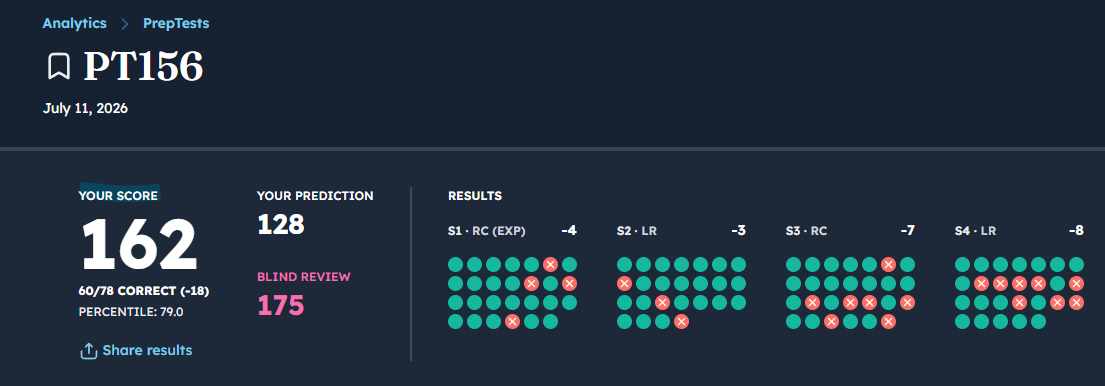
I panicked, but I'm honestly not upset about the 162. But I'd be lying if I said JJ Redick wasn't in my head screaming at me in the locker room

Hi! I'm scheduled to take the September test, and i'm currently just beginning timed practice (1 section a day, alternating days between LR and RC + blind review + reviewing wrong answers). I'm scoring in the low 150s with the timer and high 150s to 162 with BR - for both LR and RC. I'm wondering if anyone has any advice to break into the 160s, and whether i have enough time to get to a 160 by September?