


All posts
New post591 posts in the last 30 days

How is answer A incorrect and E correct? First, where in the passage is E supported? I can't find it. Next, doesn't A capture not only the main point of the passage but also Goodrich's prescription in lines 40-43 and line 45? Goodrich doesn't think that common law should be looked at as a set of rules (a legal code). Also, line 45 states that common law is a text with history and tradition, and in line 46, studying common law historically is really important. How does this not capture the idea of "a relic of the history of the English people?"

But I was under the impression that conditional statements are not comparisons. I read the first sentence as a comparison and therefore ignored it since I did not read it as a conditional statement. How should I have broken down the first sentence to see the conditional?
I thought I diagrammed this correctly, but I can't figure out how E is "properly concluded" or must be true.
Here is my diagram:
Explanation--->Must Distinguish from justification
Human action--->potentially has an explanation-->Can give an accurate description of the causes of the action (I don't think you can link these up to the first sentence)
Action justified--->person performing has sufficient reason to act
Action justified SOME justification forms no part of the explanation (These you can link together).
Generally, rational--->justification/reasons form an essential part of the explanation
What I was looking for: Since the only thing I could link up were those two middle statements, I thought the answer was going to be Person performing has sufficient reason to act SOME justification forms no part of the explanation. This isn't an answer choice though.
Answer A: This isn't in any of my chains.
Answer B: This isn't in any of my chains.
Answer C: I ended up picking this one even though I didn't see any support/I had eliminated all of the other answer choices. It was the "closest" to what what I was looking for, but it still wasn't in any of my chains. Explanation isn't part of the linked up middle statements.
Answer D: Discovered? Totally irrelevant idea.
Answer E: This is the answer choice, but where is the support? The only time "cause" is mentioned is in the second conditional statement. But even then, it is only talking about giving a "description of the cause." Rationality does imply reasons forming an essential part of the explanation (last conditional statement), but why must they be causes? Shouldn't this answer choice be "If any human actions are rational, then the reasons must be given an accurate description of the causes of the action?" I don't see how this is the same thing as what answer choice E states.
I got this question correct by POE, but I don't have any clue why C is something the author would most likely to agree with. Can someone point to where this idea is supported in the passage? Also, why is answer choice D explicitly incorrect?

http://classic.7sage.com/lsat_explanations/lsat-20-section-1-question-04/
Correct me if I am wrong in my explanation.
*The kind of question this is:* Weaken
*Premise(s):* Marijuana has THC → THC has been found to inactivate herpesvirus (IH) → IH can convert healthy cells into cancer cells.
*Conclusion:* Marijuana can cause cancer.
*What I am looking for:* extra information that we didn’t know about marijuana and its correlation with THC.
*Answer A:* No. That strengthens the argument by showing that scientists had a consensus and the same results.
*Answer B:* Yes. There is information we did not know about marijuana and how it neutralizes THC.
*Answer C:* No. That strengthens the conclusion.
*Answer D:* No. Great, but that is only an “IF.” It would still stand that marijuana causes cancer.
*Answer E:* No. Marijuana is beneficial to cancer patients, but it would still cause cancer for none cancer patients.

The answer should be D, as the other answers all call for too much. There is no apparent need for real strength. 'To be believed' is the key phrase.
Correct me if I am wrong in my explanation.
*The kind of question this is:* Weaken
*CTX:* Local agricultural official gave fruit growers of District 10 a new pesticide that they applied for three years to their pear orchards in place of the pesticides they had used before.
*Premise(s):* during the three years, the proportion of pears lost to insects was significantly less than it had been during the previous three years period.
*Conclusion:* based on the results, the official concluded that the new pesticide was more effective than the old pesticide, at least in the short term. In limiting the loss of certain fruit to insects.
*What I am looking for:* Just looking for answer choices that weaken the argument. Maybe an alternative explanation as to why the pears lost to insects were significantly less than it had been during the previous three years period.
*Answer A:* Yes, this is the right answer. This is irrelevant and does not weaken the argument. There were less fruit being produced because the number of mature trees has declined of the past 8 years. Who cares. The argument is talking about the “proportion of pears lost to insects.” So, it doesn’t matter how many pears we started with, it’s how many of those that were lost to insects with the new pesticide.
*Answer B:* Not the right answer. This weakens the argument. Insect abatement programs were used in the last 5 years, and were successful. That explains why the pears lost to insects were significantly less than it had been during the previous three years period.
*Answer C:* Not the right answer. Over the past 5 years, the birds that prey on the insects that feed on the pears have spent more time in the district 10 region. Weakens.
*Answer D:* Not the right answer. Insects in district 10 that infest pear trees are water breeders, and access to water for them is shrinking. This means the insects did not get to the pear trees. Weakens.
*Answer E:* Not the right answer. It is saying the old pesticide is still in effect after it has stopped being used, so it may not be the new pesticide that is credited with eliminating many pear eating insects. Weakens.
Correct me if I am wrong in my explanation. I am not sure about my explanations for "B" and "D"
*The kind of question this is:* Weaken
*CTX:* Post office must be replaced with a larger one.
*Premise(s):*
• The present one cannot be replaced.
• Land near the present (center of town) location is more expensive.
• Cost of acquiring a site is a significant part of the total construction cost.
*Conclusion:* Post office can be built more cheaply on the outskirts of town.
*What I am looking for:* A reason, that outweighs the burden of cost, in favour of the office to being built near the present (center of town) location, rather than on the outskirts.
*Answer A:* No. That is just information. Irrelevant. The building code is not a stated obstacle.
*Answer B:* Yes. The office on the outskirts will need a parking lot that is more expensive than not having one.
*Answer C:* No. That’s an issue that the new post office would not need to worry about. It is not mentioned how this would be a problem.
*Answer D:* No. So what if they have to deliver mail to home. The mail will still arrive to the costumers. The post office on the outskirts will still be in business.
*Answer E:* No. That’s not a problem. That’s just the process that will be taken to build the office in the center of town.

If you're willing to trade personal or diversity statements with other 7Sagers, please comment below. Once we have some interested parties, we can PM each other and offer constructive comments. Good luck to everyone preparing applications for this cycle!
P.S. I'm interested in swapping. PM me your statements!
Tough. Choice (E) is correct.
You can tell by using the
contrapositive on both of these statements:
If not (prices fall as rapidly as/more rapidly than
competitors),
then not (production costs fall as rapidly or more rapidly).
if NOT (production costs fall AS rapidly), then NOT (not slower to adopt new tech)
= as fast as competitors to adopt new technology.
Evidence -> Not Guilt
but now Evidence --> Guilt
Evidence must have changed.
A = B
now A = not B
A has changed.
(Answer B): Train = not Nantes at 11.
But now Train = Nantes at 11
Train has changed

I was just curious to see if anyone had taken 66 today (to be BR'd as a group on Wednesday night). I like to review the LR sections one question at a time before the group session just in case I miss something with the group--I've found it to be very helpful in the past. Message me if interested!
I had a really hard time understanding the answer choices, which is why I missed this one. I don't understand how D is the flaw.
Determinism is the belief that everything has a preceding cause sufficient for its occurrence. This belief is wrong since we cannot know the complete state at any given time since we cannot accurately measure both the position and velocity of a subatomic particle at the same time.
What I am looking for: Is knowing the complete state relevant? Why can't a complete understanding of the state of the universe be beyond our understating and determinism still be correct? Next, is not accurately measuring position/velocity of subatomic particles evidence for not knowing the complete state of the universe?
Answer A: This isn't the flaw in the reasoning. Just because we can't know at the same time doesn't mean we can't know them independently.
Answer B: This is what I chose, and I chose it because I couldn't figure out what D actually said. I guess this isn't the flaw since the argument isn't saying "since we can't know the complete state of the universe we can't know the states of the particles." I think this statement is backwards since the lack of knowing the states of the particles is used to support the idea that we don't know the state of the universe.
Answer C: Isn't this exactly the same idea as A? Skip.
Answer D: I don't understand how this is the flaw. Where does the argument claim that there is "no complete state of the universe?" The argument only says "it's impossible to know the complete state of the universe" because we don't know the complete state of the subatomic particles. The point of the argument is that determinism is incorrect, but I don't see how saying determinism is false means that there is no complete state of the universe. Why can't determinism be wrong since the preceding cause isn't sufficient for the occurrence, or for some type of negation of the necessary conditions provided in the first 2 sentences?
Answer E: I don't really know why this is wrong other than it just "feels" wrong.
B is definitely a flaw in the argument, but can someone analyze my breakdown of D? Here is my breakdown:
50% of people in the survey believe that politician indicted----->politician resign.
35% believe that that politician resign----->politician convicted.
Therefore, more people think politician indicted----->politician resign than those that believe politician convicted---->politician resign.
What I am looking for: First, the conclusion is about "people" in general, but we are using a survey/poll. This introduces the possibility that the poll was biased/unrepresentative. Second, the conclusion makes a sufficiency/necessity conflation in the second comparative statement (about conviction). I didn't see this at first since, and I caught this flaw during BR.
Answer A: This is OK statistical/inductive reasoning. This would describe the flaw if the answer choice put the words "potentially biased" in front of sample.
Answer B: This is the correct answer since the 35% think resign--->convicted. But, the conclusion is about convicted--->resign. Pretty obvious answer choice if you read the last sentence carefully.
Answer C: What term is ambiguous? At best, the argument assumes that "politicians" and "elected officials" are the same thing, but that is an OK assumption.
Answer D: This is what I chose since I failed to see the sufficiency/necessity conflation originally. Would this be correct if the conclusion was correctly stated (if the comparative statement stated resign---->convicted)? Since the two responses convey different beliefs and since the argument is drawing a conclusion/comparison between them, is that a flaw? I am not so sure since the conclusion is about there being "more people" believing X than Y. Since both question were part of the same poll (and presumably same sample size) and since 50% is larger than 35% of that same sample size, would the argument have been valid (assuming there was not sample bias as well)?
Answer E: Why can't the premises all be true?
This question is difficult because once you spot the flaw, it is hard to put it into words, which is why I missed it. I couldn't figure out how any of the answer choices paraphrased the flaw, so I had to pick an answer and move on. I don't really see how C is the flaw and how A is worse than C.
Bike riders don't follow the rules of the road, and this is a causal factor in 25% of traffic accidents involving bikes. The lack of bike saftey equipment is also a causal factor in 25% of those accidents. Thus, bikes are partly responsible for more than half of the traffic accidents involving bikes.
What I am looking for: I think the flaw is a math error. The conclusion says that 50+%, but we are given information about a causal factor being 25% and of those accidents a causal factor is 25%. Instead of additive, the relationship should be multiplicative. The conclusion should only talk about the percentage of bike accidents that included inadequate bike saftey equipment.
Answer A: This was the answer I chose, and I don't see how this doesn't adequately point out the flaw. Sure, you need to make an assumption that motorists are a factor in traffic accidents, but how is that not a reasonable assumption that the author overlooked? Additionally, since we conclude that 50+%, this is implying that less than 50% ("less than half") have some other cause. But, since we can't conclude anything about 50+%, this presumption is not justified. I don't see what is wrong with this one.
Answer B: No. We are to take the causal premises as truth.
Answer C: How is this the correct answer choice? Doesn't the conclusion say "at least partially responsible?" Thus, the argument DOES consider the possibility that more than one factor may contribute to a given accident? Additionally, the argument isn't talking about "all/given accidents;" it is limited to accidents involving bikes. How can the flaw be about "given" accidents?
Answer D: We don't need a source.
Answer E: Who cares about the severity of injury?
Absolutely clueless on this one. I've probably watched the video 5 times, and I just don't see how B weakens the argument that is in the passage. Also, can someone look at my reasoning for A?
Win democratic elections not fully subsidized--->poor candidates supported by rich. As a result, it could be true that the poor candidates will compromise their positions to win the rich guy's support. However, the proportion of rich people in all of the political parties is the same as their proportion in the population. Thus, the belief that it could be true that poor candidates will compromise their position to win the rich people's support is wrong.
What I am looking for: The premise doesn't support the conclusion at all since we don't know whether being proportionally equal nullifies the pressure to conform to the rich guy's opinion. For example, say that rich people are 1% of the population in all political parties; they must then be 1% of the total population. It might be reasonable to say that the rich don't have that big of an influence on policy. Now, what if the proportion was 99%? The rich might have a huge say in policy! Thus, the premise could go both ways in either providing support for the conclusion or not.
Answer A: This is what I chose, but I still am very unsure why it is wrong. I think the argument does fail to address this answer choice. Maybe it is wrong because of the word "primary?" I'm not so sure though since we are usually supposed to accept the answer choices as true. If it is the case that the "primary" function of a party still may not negate the influence of wealth, then doesn't this paraphrase the flaw very well? To me, this is hinting at the idea that the proportion of the wealthy might be so high (or so influential) in political parties that it doesn't matter which one the poor candidate choose, they will have to conform to the wealthy point of view's party.
Say that the word "primary" is the reason why this is wrong (which I am not really sure why it would be), what if this answer choice said "a function of political parties...?" Would it be correct then?
Answer B: Like I said earlier, I just don't see how this weakens the argument. I do think it weakens an argument, just not the one in the passage. Here is my breakdown of this answer choice: say the poor candidate believes, "Every person who takes the LSAT should get a 180 and full ride to Yale" but the Democrats and Republicans both think "absolutely not" (the positions of the parties is way less varied than the position of the candidate). Then sure, joining a political party would compromise the poor candidate's views. But, that isn't the argument in the passage. The argument is that the "possibility of a poor candidate compromising his views to win the support OF THE RICH [not the political party] is not true." How are these two the same argument? In other words, if this is true, isn't the LSAT equivocating between the views of the "political parties" and the views of the "wealthy patrons?"
Answer C: We don't care about government subsidized elections.
Answer D: We don't care about wealthy candidates.
Answer E: We don't care about other flaws.


LSAT Party time, that is!
LSATurday, Nov 7th at 8PM ET: PT51
Click here to join this conversation: https://join.skype.com/C8Yeac0csm8G
Please click the link and comment if you plan on participating.
Note:

Hello,
If there is anyone on 7sage that has applied to American law schools as a Canadian student coming from a Canadian university could you please give any insight as to the process. I am mainly interested in the GPA calculations. My GPA calculated by OLSAS is ~3.92 but under LSAC it is around 3.54. Any insight is much appreciated!
BR Groups for LSAT in February are so fetch!! Thank goodness we all found 7Sage instead of... Kaplan!
Wednesday, Nov 11th at 8PM ET: PT52
Click here to join this conversation: https://join.skype.com/w7McAagFN3pf
Friday, Nov 13th at 8PM ET: PT72
Click here to join this conversation: https://join.skype.com/sdiINq0J9AwI
LSATurday, Nov 14th at 8PM ET: PT53
Click here to join this conversation: https://join.skype.com/C8Yeac0csm8G
Be sure to click the link of the conversation you’re attending and announce in the comments which group(s) you’re planning on attending.
Note:

Although I struggle with consistency identifying these arguments in complicated passages, I do tend to recognize them in easier forms. Hopefully this helps someone in need of a better understanding of this particular concept

Hi guys,
For question #2, we are asked to break down this argument into premises, conclusion, and context.
The common procedure for determining whether a food additive should be banned from use is to compare its health related benefits with its potential risks. Yellow Dye No. 5, an additive used to color lemon soda, might cause allergic reactions in a few consumers. For most consumers of lemon soda, however, the coloring enhances their enjoyment of the beverage. This particular additive should not be banned, therefore, because its benefits greatly outweigh its risks.
This was my answer:
Context: The common procedure for determining whether a food additive should be banned from use is to compare its [food additive] health related benefits with its potential risks.
Premise: Yellow Dye No. 5, an additive used to color lemon soda, might cause allergic reactions in a few consumers.
Premise: For most consumers of lemon soda, however, the coloring enhances their [most consumers] enjoyment of the beverage.
Premise/Sub Conclusion: because its [Yellow Dye No. 5] benefits greatly outweigh its risks.
Main Conclusion: This particular additive [Yellow Dye No. 5] should not be banned.
J.Y.'s was different. Can people explain to me why my answer is wrong? It makes sense to me since the first two premises explain why the sub conclusion (Yellow Dye No.5 benefits greatly outweigh its risks) which then in turn supports the main conclusion. Thanks!
Admin note: This is the lesson:
http://classic.7sage.com/lesson/quiz-context-identification-1-answers/
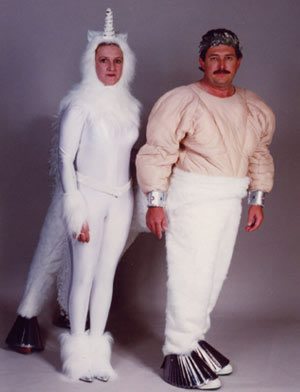
Centaurs and Unicorns. The Parallel Flaw question from the underworld.
Wednesday, November 11th at 8PM ET: PT52
DON’T FORGET TO CLICK THIS LINK: https://join.skype.com/w7McAagFN3pf
IF YOU DON’T CLICK THIS LINK YOU WON’T BE ABLE TO ACCESS THE BR GROUP
Note:
Superprep! Get your formerly non-disclosed test on! Answer that age old question: Is it really the “Champion of LSAT preparation”?
Friday, Nov. 13th at 8PM ET: PT B
Click here to join this conversation: https://join.skype.com/qzGIJoSAyLJT
Please click the link and comment if you plan on participating.
Note:
LSAT Party time, that is!
LSATurday, Nov 14th at 8PM ET: PT53
Click here to join this conversation: https://join.skype.com/C8Yeac0csm8G
Please click the link and comment if you plan on participating.
Note:
In my opinion, this is the hardest question on PT 58. I missed it because I didn't understand what B was saying. Can someone help me translate it/evaluate my translation of B into English? Here is my breakdown for this one:
There are eight craters in a straight line somewhere. Some of these craters have rocks that have undergone high pressure shocks. These shocks could have been caused by meteors or volcanoes. Since the craters are in a straight line, it isn't likely the existence of the craters is due to both meteors and volcanoes. Since the craters are different ages, it must have been volcanoes.
What I am looking for: We need to strengthen the argument. The argument seems to be making an either/or but not both argument. In other words, the craters were caused by either volcanoes or meteors, but not both. The argument is assuming that saying something about the ages of craters is evidence that it was NOT meteors. That's the assumption.
Answer A: This is what I chose, but I really didn't like it. I think this does actually strengthen the conclusion because it provides some evidence that volcanoes can actually create a "similar" line of craters. However, I don't like this answer very much because the line was "shorter" and the craters were the "same age." This doesn't address the assumption that age matters since it controls for that factor. So although this does strengthen the conclusion, it doesn't strengthen the argument.
Answer B: This is the correct answer, but I am having a very tough time translating this into English. This is saying that there is no known natural cause that could account for 8 meteor craters of different ages in a straight line; I probably should have chosen this answer in hindsight since it is the only answer choice that even talks about a relevant case of different aged craters. I think we can assume two things from this answer choice: volcanoes are a natural thing and meteors are a natural thing. Here is my translation:
1.) There is no known volcano that would likely account for the craters being from a meteor. To me this is like a "duh?" statement. Volcanoes and meteors are independent things. Of course volcanoes wouldn't account for the meteor craters.
2.) There is no known meteor that would likely account for the craters being from a meteor. I think this is the reason why this answer strengthens the argument. Does this flat out deny the chance that meteors were the cause? I think at best it only sort of does since the idea of "known" isn't all encompassing. There could be cases that we don't know about. So, in my mind, at best this is a pretty weak strengthener. It depends heavily on the idea that what is "known" is actually a reliable thing to use as evidence in this inductive argument.
Answer C: I think this severely weakens the argument since it suggests that it was neither meteors nor volcanoes. Definitely don't want this one.
Answer D: This is similar to C. This weakens the argument since this suggests that volcanoes were not the cause.
Answer E: This is another trap answer choice that I had a tough time eliminating during the timed exam. I think this answer is very similar to A in that it does strengthen the conclusion, but not the argument. This answer choice suggests that a single meteor shower couldn't have created the craters. However, what about meteors from different showers at different times? Being from the same meteor shower implies that the craters that would have been potentially created would be roughly the same age, which wouldn't create an analogous situation to begin with.
http://classic.7sage.com/lsat_explanations/lsat-58-section-4-question-23/