


All posts
New post513 posts in the last 30 days

Seeking recommendations for best practices to utilize in the final two weeks before test day

LSAT Format Change: Embedded Unscored Questions Starting August 2027
LSAC announced that starting with the August 2027 LSAT, the standalone unscored section goes away. Unscored experimental questions will instead be mixed into the three scored sections.
New format (August 2027 onward)
Every test taker gets the same 3 sections in the same order:
1. Reading Comprehension: 52 minutes, 6 passages, 40 questions (4 passages / 27 questions scored, 2 passages / 13 questions unscored)
2. 10-minute break
3. Logical Reasoning: 45 minutes, 32 questions (25 scored, 7 unscored)
4. 10-minute break
5. Logical Reasoning: 45 minutes, 32 questions (25 scored, 7 unscored)
What's not changing
- Question types
- Number of scored questions
- Time per question
- Score scale and comparability across cycles
What it means for you
- Testing through June 2027: Nothing changes. Prep with the current four-section format.
- Testing August 2027 or later: LSAC will release new-format practice tests in February 2027. Switch to those once they're available.
Practical implications
- You won't be able to identify the unscored questions, so every question counts as far as you know. No more spotting the experimental section.
- Sections are longer: 52 and 45 minutes instead of 35. Stamina within a section matters more.
- Section order is fixed, with RC always first. You can build your warm-up and pacing routine around that.
- Total time on test day goes up slightly: 142 minutes of testing plus two breaks, compared with 140 minutes plus one break now.
We're already on it. Don't worry, you can rely on 7Sage to adapt so you'll be able to practice under real test-day conditions well before August 2027.
https://www.lsac.org/lsat-will-look-little-different-starting-august-2027

Hey all!
With the November LSAT looming, I've begun thinking a bit more about admissions timelines. I have heard many varying opinions about submission timing and was wondering if anyone would be able to clarify / give a bit more clear of a timeline for what is considered early v. on time v. late!
im taking the november lsat and applying once my score comes out (ll be applying as soon as scores drop because i already have a score im okay with on an official test. however, i'm still hoping to move it up a few pts.) since score release date is 12/2, im planning to have my first round of apps in by the end of that week. is this vastly too late for scholarship money? is this considered a "late" application?
if there's more specific info. that I can provide that would clarify these answers, I'm more than happy to!
Thanks in advance:)

Omg the explain it plainly new feature at the bottom of each page is exactly what I wanted! It’s a brief moment to make sure I’m actually digesting the information and not checking the quota for the day.
Thank you to the 7Sage community for coming out with this great feature.

Hey everyone, I will be taking Nov lsat for the first time, and I have accepted the reality that I won't be able to get a 170+, and I am willing to keep studying till I get a 170+ to get into t14 or t20. I did start studying lsat like a year ago, but was very very new and didn't know literally anything and what and how lsat works. Very slowly and gradually, in Feb I got a lil idea, and then over the summer I got the chance to get 150s and 160s in my drills. I didn't do PT much, I know i know i should've, but i was lowkey tryna just get used to what lsat is about. And because of that, I didn't get the chance to build my endurance and even test anxiety, and so now my PTs are 140s or 150s. I want June 2027 to be my last lsat attempt with a 170+ and I think I do need some help now. I was using the core subscription from August and until now, and even got the chance to try live free trial and safe to say I really loved it and it genuinely helped me a lot and kept my highest 167 score in drills. I can only use coach subscription as its most financially suitable for me; I cannot afford expensive tutors, so if someone has that subscription, please help a little and lmk how it worked out for you! I don't have any access to medical needs or anything, though that 50% accommodation looks very very sweet for me.

Hi! One (relatively) low-stakes suggestion I hear from people on improving my LSAT score is to read more. People say to read law reviews, news articles, science journals, etc. Essentially, read anything that is somewhat challenging.
In my free time at work, I have been reading a lot of NPR articles over the last few weeks, and maybe it's confirmation bias, but I genuinely believe it's improved my analytical thinking and short-term memory. It's been particularly useful right now as I wrap up the Reading Comprehension Modules.
So my question is: What are y'all reading? But even more specifically, what sources? Is there a certain journal or publication that you find interesting? I tend to struggle more with the science passages in RC, so I'll definitely be targeting science-related sources, but I'm really open to anything. Psych, History, Law, Philosophy, etc. ANYTHING.
Ideally, this could be a thread where there's enough variety that anyone can find something for them. Hopefully this post doesn't get lost in the abyss...

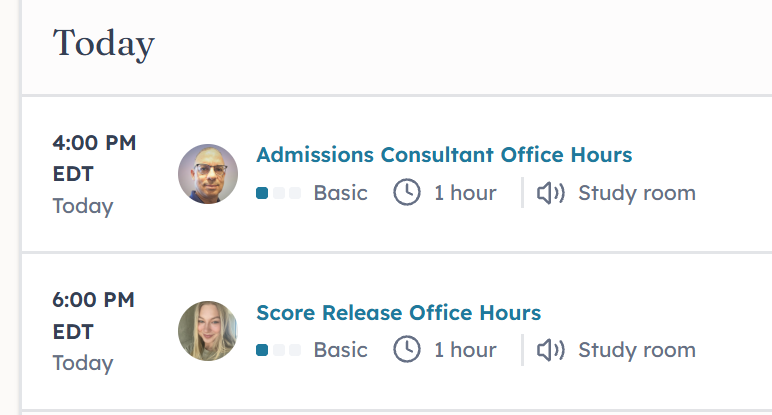
Trying to figure out the next steps after score release? We'll be stacking free office hours with LSAT instructors and admissions consultants to make sure that you can get your questions answered and chart your path forward.
You can find those on our classes page.
Please find today's schedule below:

I cannot believe it. I was shaking when I saw this score. I am NOT of sound enough mind to write an entire reflection on my journey right now, but I am eternally grateful to every single person I've interacted with here during my time studying. My goal was always to make people laugh and to give them support and celebration at every step and milestone; studying for the LSAT is hard enough, after all. To have something of my own worthy of celebrating is unbelievable. I keep refreshing LSAC so I can see it over and over again.
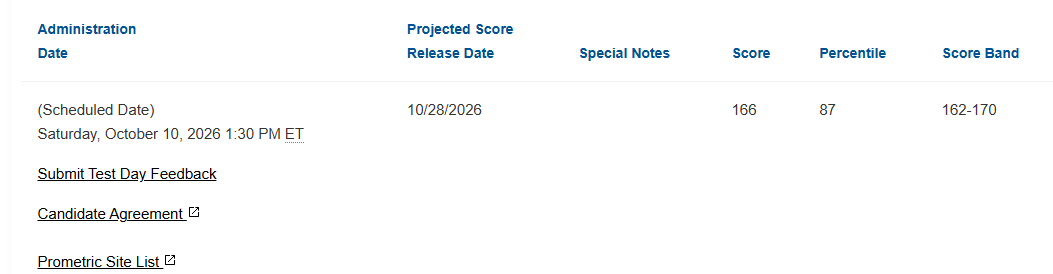
I absolutely want to thank our instructors on here. This curriculum, site, and support system is one unparalleled and invaluable. I appreciate every single person who has ever liked my silly comment about how getting likes on 7sage comments is the real goal and getting a 180 is the second priority. This feels like a graduation ceremony!!!
Congrats to every single person who has taken the October LSAT, and best of luck in all your applications. Make us all proud and get into your dream school!!!

I got a 160 on the August LSAT and was extremely disappointed after having averaged around 168 on practice tests. I signed up for the October LSAT and just received my score of 170! That being said, don’t let low scores ruin your motivation. I believe in fluke scores/sections, just know there’s always something you have a weakness in (mine being RC sections) which you cannot control whether are on your LSAT or not, and that you might just make dumb mistakes sometimes. Thanks to you all

Looking for advice on what specifically admissions are looking for in letters of recommendation. Applying again to a school I got waitlisted at and want to refresh them. Thanks in advance.

Hi! I just started studying for the January LSAT and I would love to have a study buddy online via zoom or anything that works. I would like to study mornings at around 9-10am EST for roughly 3-4 hours . We can set goals, check in everyday about what we learned, and really just help each other out.


Hey y'all! I'm looking for advice on closing the gap between raw scores and blind review scores, and looking to see if anyone has any suggestions as to how to remain consistent with scores. I've made my analytics public in case y'all can diagnose something I can't, but I've just felt really frustrated with my performance recently. I miss a question or two on a section, then miss eight on the next section, and I can't afford to continue this pattern going into the November exam. Is the answer in more untimed practice? My foundational accuracy seems to be strong, but under timed conditions I'm suddenly missing easy questions and not noticing (sometimes I feel uneasy, but I don't want to get stuck on any one question). What do I do? I'll be taking the LSAT for the fourth time in November, and I can't do another <160. My SageAI keeps telling me that I'm peaking at just the right time, but I'm not really sure that I am. Any advice would be much appreciated!!

 I actually got this score Saturday, it's been awhile working towards it. My best suggestion is if your getting most of the easy questions right then instead of full sections, practice just the second half 13+. I'm really hoping I can get this on the next couple practice and November. Have confidence in yourself and trust your potential!

thoughts on redoing practice PT that was taken a month ago for timed practice or is that too recent where there can be a possibility of recency bias

Good Morning/Afternoon to all,
Has anyone looked into changing their LSAT date from NOV to JAN? Will submissions to fall of 2027 still be feasible?
My PTs have been so inconsistent, and I believe the extra 8 weeks will push me in a really good spot my concern is that I don't make it to school in the fall because of a late LSAT.

Hello! I was wondering if it'd be possible to be able to take notes alongside the explanation videos? Right now you have to toggle between the two, which makes it more difficult to take relevant notes down from the video (unless I'm missing something, and there is a way to do this without opening two separate browser windows). Thanks so much for considering!

I feel like my P.S. and my Supplementals really mostly focus on my experiences post-grad. For context I am two years out of school, and I did have some relevant experience in undergrad, but my most meaningful experiences in terms of law school have been post grad. Is this something that the admissions officers might question?

Hi! I’ll be taking the LSAT for a third time in January. I took it twice (November 2020 and August 2026) when I knew I wasn’t ready and both of my scores reflected that. I was recently diagnosed with OCD so that may have something to do with the anxiety and the time pressure I felt. I knew exactly what I needed to do to lock in the minute I left the testing center for the August exam. I’ve been self-studying most days while working full-time and completing a masters. In my previous attempts at preparing for the exam, I was focused way too hard on theory and not practicing enough as I should’ve. Now, I make it a point to do at least 15-20 LR questions, map out at least 1-2 RC passages every day and that has made a world of difference. Practicing and really chewing on the questions I got wrong has help me better see and understand certain patterns of the exam. I just did a drill from test 117 and my results are listed in this screenshot. Believe it or not, I’m 10 points up from my August exam and I’m still pushing for high 150 to low 160. A mouthful, I know. However, I write this to find some community and figure out how to close the blind review gap? Any tips and tricks on how to breakthrough and knockout tougher questions with a little more confidence? Thank you all in advance :) 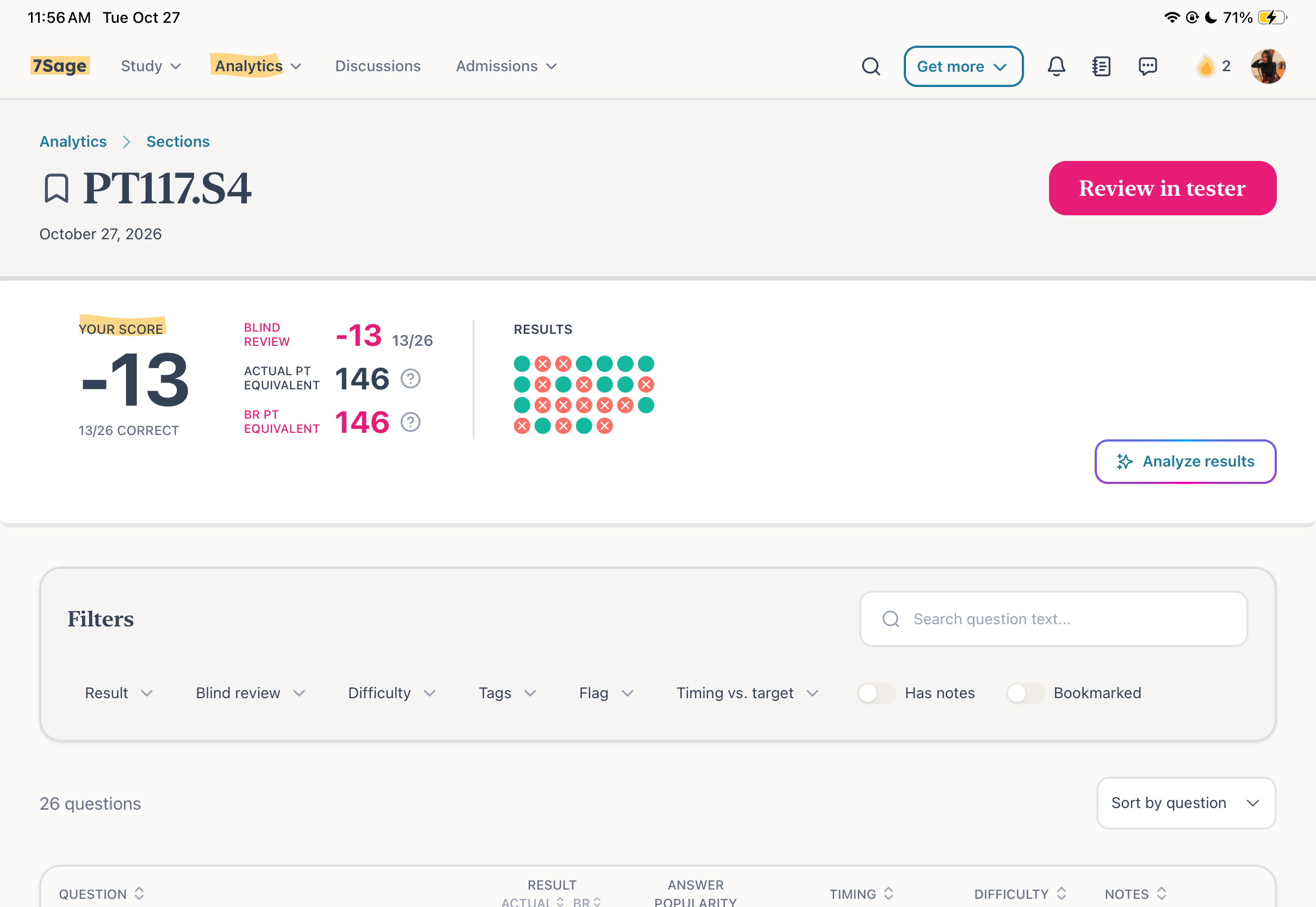
Hi- Random question. In a lot of sample essays that I have read, the authors use contractions. I know that these essays allow room for storytelling and creativity- but contractions were a big NO in college and out of habit I don't write essays with contractions. Do contractions help give a more natural voice, especially in the age of AI?

LSAC August 2027 Overhaul: Email/Feedback Template to Protest the 52-Minute RC Sections and Interface Regressions
Hey guys, if you have concerns regarding the upcoming August 2027 format changes and recent interface adjustments, please submit feedback to LSAC at https://www.lsac.org/send-us-your-feedback. It doesn't take long, and if enough people speak up, maybe they will listen. Here is an example of a complaint with regard to the extended section lengths, embedded experimental questions, and degraded interface functionalities. If you have similar concerns, feel free to use this as a template:
Dear LSAC,
I am writing to express my deep concerns regarding the newly announced LSAT format changes scheduled for August 2027, as well as recent regressions in the testing interface. Specifically, I am concerned about the inflation of section running times, the integration of embedded unscored questions, and the removal of critical text-navigation features.
The update that expands the Reading Comprehension section to 52 minutes (6 passages) and both Logical Reasoning sections to 45 minutes (32 questions each) fundamentally changes the nature of the exam. Shifting the structure to these extended blocks transforms the LSAT from an assessment of analytical skills into an arbitrary test of physical and mental endurance. Because the unscored experimental questions are now hidden and embedded within these elongated sections, test takers face immense psychological fatigue, as they are forced to treat every grueling item as scored with no ability to strategically pace themselves. This pre-induced cognitive exhaustion heavily penalizes students on subsequent sections and disproportionately disadvantages neurodivergent applicants, such as those with ADHD, for whom sustained executive focus under a single continuous block is an unmeasured barrier.
Compounding these structural changes is a broader pattern of regressions within the software interface. The digital highlighting tools have become increasingly clumsy and unintuitive to use. Furthermore, the removal of pre-highlighted line references in questions now forces test takers to manually search through dense passages for specific quotes. For an exam that demands rapid active reading, burying core tools and removing visual anchors introduces unnecessary friction and artificially slows down a student's pacing under intense time constraints.
Beyond the immediate impact on test-day efficiency, these constant adjustments create an unstable landscape for individuals navigating an already stressful, competitive rolling admissions season. LSAC has introduced multiple unprecedented changes over consecutive cycles—from removing Logic Games to altering section weights and now completely re-engineering section lengths and interface tools. Personally, these shifting goalposts have forced me to repeatedly delay and move my own test dates simply to adapt to new platform rules. Forcing applicants to constantly relearn how to physically interact with the platform while balancing personal statements and application deadlines severely disrupts multi-year study strategies and invalidates historical score comparisons.
I respectfully request that LSAC reconsider the August 2027 structural overhaul and restore the standard 35-minute section parameters. At a minimum, I encourage LSAC to reinstate automatic highlighting features and pre-highlighted question text references to ensure the testing environment remains equitable, predictable, and focused purely on the legal skills the exam is intended to measure.
Thank you for your time and consideration. I appreciate your willingness to consider feedback from test takers and hope these concerns will be taken into account.

What's up with the new question page? (I'm talking about the tab that pops up when you click the magnifying glass on a question you just did in a drill, section, or PT. The one that lets you toggle between video explanations, analytics, discussion, etc.)
Its extremely buggy and there are no longer easy-to-access explanations for each individual answer choice which was so useful if I didn't want to watch an entire video to understand why one specific AC was wrong.
I can see why including the way you interacted with the question might seem like a good idea but, at least for me, its just not working practically and its definitely not worth removing the convenience of the individual AC explanations you could find with the click of a button imo.
Any thoughts?

Outside of tutoring the LSAT, I like to do long-distance running. A mentor of mine once told me, "people often overestimate the amount of progress they can make in a month but underestimate the amount of progress they can make in a year." His advice could not apply more to studying for something like the LSAT. Pattern recognition, the skill fundamental to success on this test, is most easily instilled over a long period of spaced, repetitive exposure to said patterns. For those of you looking to cram into the current application cycle while far from your goal score, strongly consider waiting a year to apply. I know it sounds unappealing, but imagine this: with a year added to the amount of time you have to study, why not set your goal score higher? The opportunity cost of forcing yourself to apply this cycle might be 5-10 points on your LSAT score that you could have if you wait another year and devote it to studying. This is the conundrum I faced a little over a year ago, and I am very happy I waited (and fortunate to have had the means to).
It's not surprising to me when I teach a concept and the student makes the same mistake two weeks later. That is natural—the correct thought process hasn't been ingrained yet. Without fail, after sufficient repetition and attention to not making the same mistake again, the mistake goes away. It's just that for most people, it will probably take longer than a month. For me, I spent about a year from start to finish, and I probably attempted about 4,000 questions.
More than 3,000 questions of these were from drilling, which brings me to an important recommendation based on what worked for me: drill, drill, drill! Sections are fun, but fight the urge to constantly benchmark your progress if you can. Your accuracy statistics in the previous two weeks in the Analytics section are more than enough!
Focusing on drilling made the LSAT studying process much less stressful and, I think, more fruitful. By drilling, you can see if your answer was correct before attempting subsequent problems, which is SO important if we want to optimize for learning from mistakes. If you take a section and review it all after, it would be a shame if you got two questions wrong for the same reason. If you had known that you messed up the first time, you might've been correct on the second opportunity!
Of further importance is clustering your drills by similarity: either by question type or by stimulus logic. This allows you the opportunity to make a similar mistake soon after you make one, which accelerates the learning process! The mistake will still be fresh in your mind, lowering the chance that you forget about it and make it again.
The ultimate pillar of how I found success is untimed work! Untimed work allows for a thorough understanding of the problem, which is crucial for building your foundation. There is misconception that speed and accuracy are supposed to be built independently. Speed follows accuracy; it is the understanding that you have become very accurate and hence start hesitating less on answer choices. In practice, it is very beneficial to understand why the correct answer is correct and the wrong answers are wrong. Eventually, you will realize that either one of these is independently sufficient for getting the right answer. Speed will naturally come when you are confident in accuracy.
One last thing to note is that another thing that is much more feasibly achieved over a year than over a month is improved reading comprehension. An intuitive understanding of what a piece of text implies is CRUCIAL to a high score on the LSAT. Intuition can be built, but it takes persistent, devoted effort. A good litmus test for success in extracting subtext is how good you are at detecting sarcasm. Maybe find a satirical novel and chip away at it.
I read The Economist for 20 minutes in the morning and a novel for fun until I fell asleep. It doesn't have to be anything crazy hard, just something you enjoy. I stopped reading for fun after middle school (oops), so I picked back up where I left off with YA dystopian novels. It was very fun and very helpful.
As your tutor, I will encourage you to adopt the philosophy I've described above, but I am ultimately happy to work within any constraints you may have. Sessions usually involve me asking you about a specific area you want to focus on, and then we go through a drill I design to target said area. I have an extensive "Patterns in Right/Wrong Answers" document that I built over my year of studying that I leverage in helping you uncover the patterns of the LSAT. I primarily focus on LR, but I also do RC with students when desired.
My official LSAT score was a 174. Currently, I charge $30 per hour for students with an LSAC need-based fee waiver and $45 otherwise. In service of my goal of encouraging people to commit to studying in the longer term, I'm also exploring an option where I charge on a 4 week basis where you can schedule up to 5 hour-long sessions per week. This will be $500 with a fee waiver or $750 otherwise. Here is my website if you'd like to read more about me or my philosophy: https://www.fundamentlr.com/ or you are welcome to text me at +17737919362 or email me at mickey.claffey@gmail.com
Of course, I offer a free introductory call which you may schedule here: https://calendar.app.google/JwBTorg7g9VWmRoK6
If you made it to the end of this post, thanks for reading, and I'm looking forward to getting in touch!

Can anyone give me tips on how to reach the last passage of RC during timed practice? :/ RC is already my weakest section, and not getting to the last passage almost guarantees me around -5 right off the bat which is really discouraging. I think my biggest issue is spending too much time on questions but even when I understand an easier passage pretty well, I still end up spending around 10–14 minutes (+questions) on it. I'm taking the November LSAT, so I'd really appreciate any advice on how to improve my timing

You can now chat with Sage AI and have it change your 7Sage settings for you. For example, ask it to “turn on dark mode” or “turn off my streak,” and it’ll do it.
Why we built this
Our philosophy at 7Sage is that there’s no one-size-fits-all approach to the LSAT. Not everyone should diagram, or not diagram, or only drill, or only follow the curriculum. Students come from different backgrounds, approach the test differently, and are in different situations. We want 7Sage to fit your situation, which is why we’ve been building in more and more ways to customize the app.
But as those customizations piled up, the settings started getting overwhelming. There are a lot of them, and digging through menus to find the right one isn’t a great experience. So instead, just tell Sage AI what you want.
Still a work in progress
In theory, everything in Settings should be controllable through Sage AI, but it still needs some polish. In my live demo it misinterpreted what I was asking and was slower than we’d like. Speed is on our list.
Please try it out and let us know whether it’s useful, and what other customizations you’d like to see. We can’t promise to ship everything, but your feedback helps the whole product team understand how you actually use 7Sage.
Thanks!

After graduating college, my friends and I formed a house band that plays a couple gigs now and then. It was mostly just to fill up time during my gap year in addition to working. Super informal but very fun! I already have the several years of college marching band and leadership on my resume, this would be in the "hobbies and interests" section. Not sure how/what to include. Thanks!