


- Joined
- Apr 2026
- Subscription
- Live
Admissions profile
Discussions
Hey team! I've been really honing in conditional reasoning questions because it seems to be my weakest but I keep stumbling over "usually" phrases in the stimulus. How do you understand these or break it down in lawgic?
^esp troublesome in parallel reasoning questions ahaha..
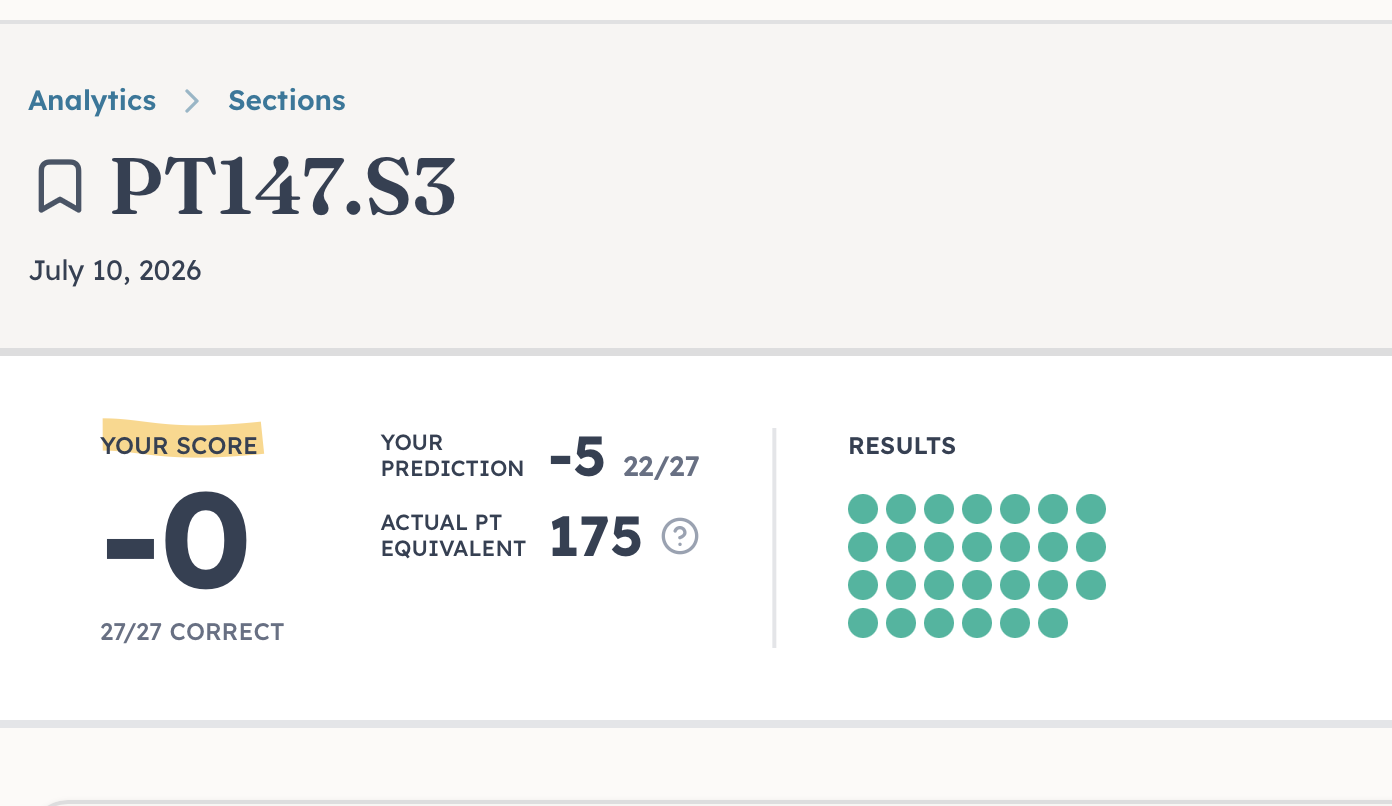
I started properly using BR (not just guessing and oh I guess I'll just choose the other option), but properly understanding why my option is what. And stopping all my second-guessing esp. when I have a gut feeling and time is there. Then did a full RC section timed and each question made sure I either uunderstood or for a trickier passage got the gist of it and was able to do it. AND FINALLY WENT FRMO -6 IN RC TO A -0 FOR THE FIRST TIME MY FIRST -0 IN ANY SECTION. finally I feel the work paying offffff

Ah I saw the impressionistic approach and thought that because both the New Women and Chopin used the method it couldn't be a difference--I failed to see the "more consistently throughout" and make the connection to the "more fully"
12/14 - argh the idea of a "possible" objection only being a hypothetical object not an actual objection got me
10/14 then 14/14 br -- I think taking the time to flush out differences between answers in POE and really remove myself from the knowledge I know vs. the knowledge given in the stimulus, is key
12/15 - for all 3 that I got wrong (right on BR) was that I was debating between two answers, but on BR was able to properly flush out which was right v wrong and why...timing on these though...
pleasantly surprised - 13/14
definitely struggled on timing though, especially reading the paragraphs and making notes of the different perspectives (my take on low res summaries) heklped. And then delving into questions. Some were a bit tricky the questions and I found myself second gussigng a tad but sometimes ig we just got to go for it !
About 30 seconds over; tried to shallow dip until they all jumbled together and then realized I needed to default to logic so that helped a ton more especially on these options that seem so similar
The shallow dipped part really helped, I was a bit skeptical at first but automatically eliminating a,b,c helped, then examining d to see it's not the same subject and bam, it's e
life has made sense this definitely helped to understand the last lesson part too
Was debating between A and C for a tad, but the key thing is that assumptions are implicit so if you can find the part of the stimulus quoted in the stimulus itself you can already cross out any options with "assumptions"
This was quite confusing for me, I kept writing the arrows as rol -> indiv freedom because one led to the other but mixed it up becuse I forgot that rol is necessary for indiv freedom so i would be indiv freedom -> rol
these are starting to make sense, I think the main trick is accurately pointing out what is the main conclusion/argument here and then from there POE based on what is relevant to the argument and makes sense given the premises
Distinguishing between the fact that we're looking at the benefit in geneal to consumers rather than the extent of the benefit makes D vs. E clearer
Note to self: replace the jargon in the answer choices with the exact terminology/referrred to thing
Oops, missed the "reject" part of the question -- definitely will be specifically highlighting that in the question stem moving forward as to not make the same mistake again
@MichaelWright ohh got it thank you!