


All posts
New post574 posts in the last 30 days

PayPal has a feature called Bill Me Later where you can pay with credit, and as long as the $ is paid within 6 months, no interest is charged. The ability to pay over the course of 6 months would really help a lot of students who'd rather not have to pay everything all at once. Cambridge LSAT accepts PayPal and and I was wondering why 7sage doesn't. I think this added feature would help attract even more students. Would it be possible to add PayPal as a payment method?

Just wondering why that is, if that is the case?? I mean they still are administered official LSATs why not weigh them equally to tests administered in other months...

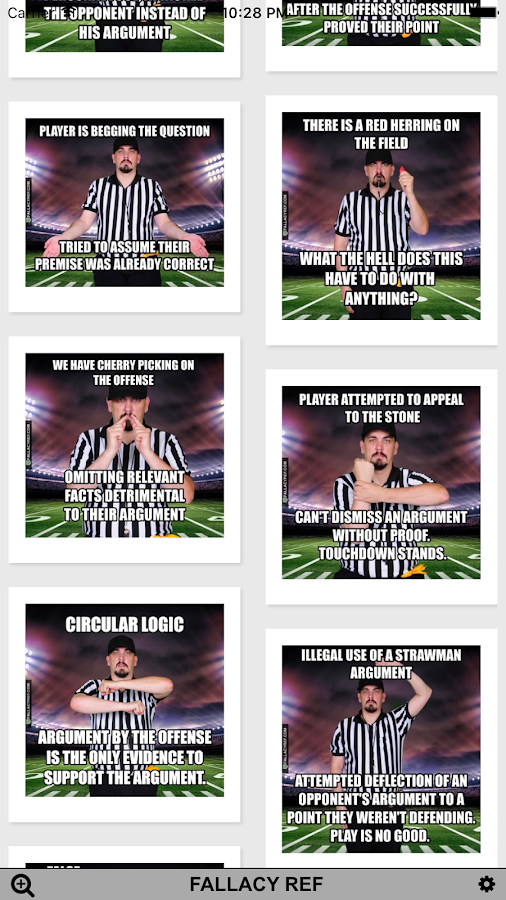
December Test Takers, I give you Fallacy Ref. He keeps us in line!
Don’t go it alone! Group BR! :)
Note:
Who is actually interested in Monday morning BR calls? No one was there today. Let me know.
Wednesday, Nov. 25th at 8PM ET: PT 74
Click here to join this conversation: https://join.skype.com/wGTZaVjudu5m
Friday, Nov. 27th at 8PM ET: PT Superprep 2
Click here to join this conversation: https://join.skype.com/qzGIJoSAyLJT
LSATurday, Nov 28th at 8PM ET: PT75
Click here to join this conversation: https://join.skype.com/tA67DTS6xgqW
MONDAY, November 30th at 11AM ET: PT??
Click here to join this conversation: https://join.skype.com/tLgIUSlQDEPg
Be sure to announce in the comments which group(s) you’re planning on attending.
Note:

Hey Everyone!
Just out of curiosity (I've already decided to withdraw from the December test), do schools seldom admit students who do not fall within their "25%, 50%, and 75%" LSAT/GPA numbers?
A friend of mine graduated from USC, and mentioned that he knows two people who were accepted with LSAT scores that were about 5 points below the "25%" number. I'm not sure if he was referring to USC law, but either way, how common is something like this?
I know that my GPA falls within the "75%" for the vast majority of schools, but my LSAT is lacking. Regardless of where I apply, I am aiming for a 165+, for the purpose of receiving a decent scholarship.

When I do games, does not matter which type, I prefer to make as any boards as possible because this decreases the probability that I will get answers wrong. However, on some games, there are many probabilities and it takes more time than I want to spend on creating new boards. But, when I attempt not to make as many boards, it seems that I get more answers wrong.
Any advice on how I can come to a happy medium?????

How often do you guys review your stack of questions? My stack of questions is getting quite big now. I’ve got about 160 of them and I’m working on Pseudo Sufficient Assumption Questions. I reckon my stack will only get much bigger as I move along in the course.
Reviewing these questions that you didn’t get right, certainly helps to reinforce correct reasoning skills obviously for questions you got wrong or got right but weren’t 100% sure.
The problem is the bigger your stack gets, the longer it takes to review. (It took a little over an hour for me to review all 160 of them. I reckon it’s gonna take quite awhile to review all of these questions once I’m able to move onto doing PT’s)
Also, inevitably you end up memorizing the correct answer choices. Any thoughts?

This is a necessary assumption question. I correctly identified what is the premise ( aesthic value --> possible for at least two readers to agree on the interpretation) and the conclusion ( objective evaluation of a poem is possible -> popular belief is false). I realized the gap immediately but still had an issue with the correct answer.
I see how the contrapositive of (D) would make it necessary for the conclusion but at first glance I thought it was a possible mistaken reversal. I assumed it would be aesthic value -> objective evaluation. Can someone please explain how to better approach NA questions when they play on conditional logic and a possible rule of thumb. Perhaps a better illustration of the conditional logic chain would help in absolute terms (ex. A -> B -> C etc.) Thanks!

I have been "just about to start" my LSAT prep for way too long now. I am a 2015 graduate with a full-time paralegal job and I first intended to study during college and take the June 2015. Bought Blueprint and never used it (senior thesis was too time consuming). Blueprint expired and I didn't renew. Then, December was the goal, but I didn't start prep and decided February would be better. I still haven't started and I'm worried that now I should take June, but I don't want to keep this cycle going. When I get home from work and my 1.5hr commute each day, I just don't feel motivated to study.
Part of what's holding me back is that I bought Blueprint and didn't use it, so I'm afraid of buying another course now and then having the same thing happen. My diagnostic was 153, with -16 LG, -8 RC and -5/6 LR. It is obvious that LG needs the most work. I feel comfortable with the type of thinking that LR and RC require, and I honestly feel that PTs will really help me in those areas, but the fact of the matter is, I have no LG competency right now, and in order to make PTs worth my time (and to avoid wasting them), I need to learn how to do LGs. I would like to score above 165.
I'm left with the question of whether I really need to spend money on a course (if I do, I think it will be 7Sage), or if the PowerScore Logic Games Bible can teach me what I need to know to start doing PTs. If I do 7Sage, is the Ultimate really necessary? Maybe a few meetings with a tutor would do it? Honestly, I'm lost, and some guidance would be very helpful.

Hey all,
I was wondering what is the best way to warm up before an 8:30 AM test?

Could anyone explain why D rather than C is correct?
P: (1) most of the new shows produced last year by WW were canceled;
(2) this year's new shows are all police dramas, and few police dramas have been popular in recent years
C: most of this year's new shows will be canceled
To strengthen, we want to make last year and this year more similar. So it is better to find sth like last year's police dramas were cancelled.
C: police drama --> cancelled
D: cancelled --> police drama
I feel both C and D could fulfill the gap.

Hey everyone. I have a problem with this question because of the wording in answer choice D). While it could explain why recovery is better for those in small hospitals, it explicitly talks about medical procedures in larger hospitals. Is that not inherently different from illnesses, which is what is referred to in the stimulus?
Just wondering what others think?

Dear fellow 7sagers,
The upcoming test will be my third and so last LSAT I'll be taking before I apply to law schools.
But there is a problem, namely, that I can't locate PT 76 anywhere.
I've taken all the PTs besides 75 and 76 and it's really important to me that I take PT 76 before test date.
Do any of you guys know where I might get it? If it is the case that it hasn't been published, do you know when it might become available?
Thanks!
Hi, I would appreciate if anyone could explain why E is correct as now I am confused when could we make assumption in the Lsat.
Admin note: edited title; please use the format of "PT#.S#.Q# - [brief description]"

We're meeting this coming Saturday (November 28th) @ 12pm (EST). If interested, mail me your Skype handle, and I'll add you to the group. Cheers!
Hey everyone. After much contemplation, I needed some clarification for this one.
(E) says the “province could keep its workers and use them more effectively, with a resulting savings of $600 million in its out-of-province expenditures.” I get the concept of paying for the workers by using them more effectively.
JY says the money to pay for the workers is coming from “$600 million in cost savings.”
So does the cost savings refer to the “$600 million in its out-of-province expenditures?”
Does this mean that after the government has refunded the $600 million to the taxpayers- they still have another $600 million left in their budget and they’re going to be very thrifty with that money by cutting down certain expenses?
Thanks.

Wow, I know for the most part if we apply the skills we've come to learn then we should be OK with the slight variations of the more recent exams, but honestly, holy shit.. they are definitely harder. Maybe not so much the questions, but I guess the length of the question stems. Super frustrating, I wish I started PTing these 69 and up 2-3 weeks ago. Any advice on how to tighten up LR on these more recent exams? I just took 70, and my confidence is shaken. Is it just an adjustment period with reading these longer stimuli? I sure hope so.. or im fucked 13 days from now

Hi All-
I am having trouble skipping questions in LR. I recognize when I am spinning my wheels about half the time but the other half it is when I look up and I have spent three minutes or more on a question that I realize that I need to skip it. Any tips on how to skip questions and when to come back to them? How about when you skip questions, how do you mark it on your bubble sheet?
Thanks in advance for any tips!

Whats the lowest ranked law school you would attend and why?

Hi. I have submitted my answers for a prep test and the scores are not loading. Anyone else experiencing this problem?
Do you think Bruce Willis used bentonite or barite when he drilled into the asteroid in space? Find out tomorrow...
...for Group BR
MONDAY, November 23rd at 11AM ET: PT54
Click here to join this conversation: https://join.skype.com/tLgIUSlQDEPg
Note: That 11 AM start time is EASTERN STANDARD TIME. So if you’re on the west coast, that’s an 8:00 AM.
Be sure to announce in the comments which group(s) you’re planning on attending.
Note:

The circles that tell you your score for the Test and for each section is not working. I have tried numerous browsers with no luck.
Note: this is on test's that I have previously taken and graded an am coming back to for review.

Hi guys, I'm new here.
Someone might ask the same question before, but I'm wondering if any of you have used/are using both Velocity and 7Sage? I'm currently using TestMaster's Full Online Course. My TM account only gave me about two months of access of its online materials. I'm a full-time student and when my account first expired, I only finished 30% of the lessons. I had to spend another $700 on an extension, which only gave me two more months!! My TM account is about to expire again in two weeks.
So now I'm looking for a prep course that can supplement my study when I start doing PTs. I've watched some videos from both Velocity and 7Sage and both seem great to me. I plan to take the test in June 2016 and I have to start early because of my other school obligations. I would really appreciate it if you guys can give me some detailed comparisons between the two, specifically the 7Sage Ultimate+ and the Velocity Online Course!! I'm aiming for 170+. Any other test prep suggestions are welcome too.
Thanks!!

I need some help on this MSS question
The stimulus states that some vitamin-fortified foods have 100% recommend daily intake of vitamin A and D. We also know from the stimulus that some (many) people overestimate the serving size of vitamin-fortified foods, eating two or three times the standard serving. The answer ended up being (B) Some people who consume vitamin-fortified foods exceed the recommended daily intake of vitamin A and D.
But isn't it possible that those who overestimate and eat double servings of vitamin-fortified foods are not eating the ones with 100% recommend daily intake of vitamin A and D?
vff some 100% vit a+d
vff some eat two or three times serving size
Am I interpreting the stimulus incorrectly here?

What are the chances or likelihood of transferring law schools after first year?
Does anyone know what factors into it?
If its desirable choice at all?

Hello, I am having a trouble understanding this rule:
H occupies the aisle seat immediately behind G's aisle seat. Why are we putting G in the aisle seat? What about this:
3 _ H
2 G _
1 _ _
Isn't H still immediately behind G's aisle seat?
Thank you